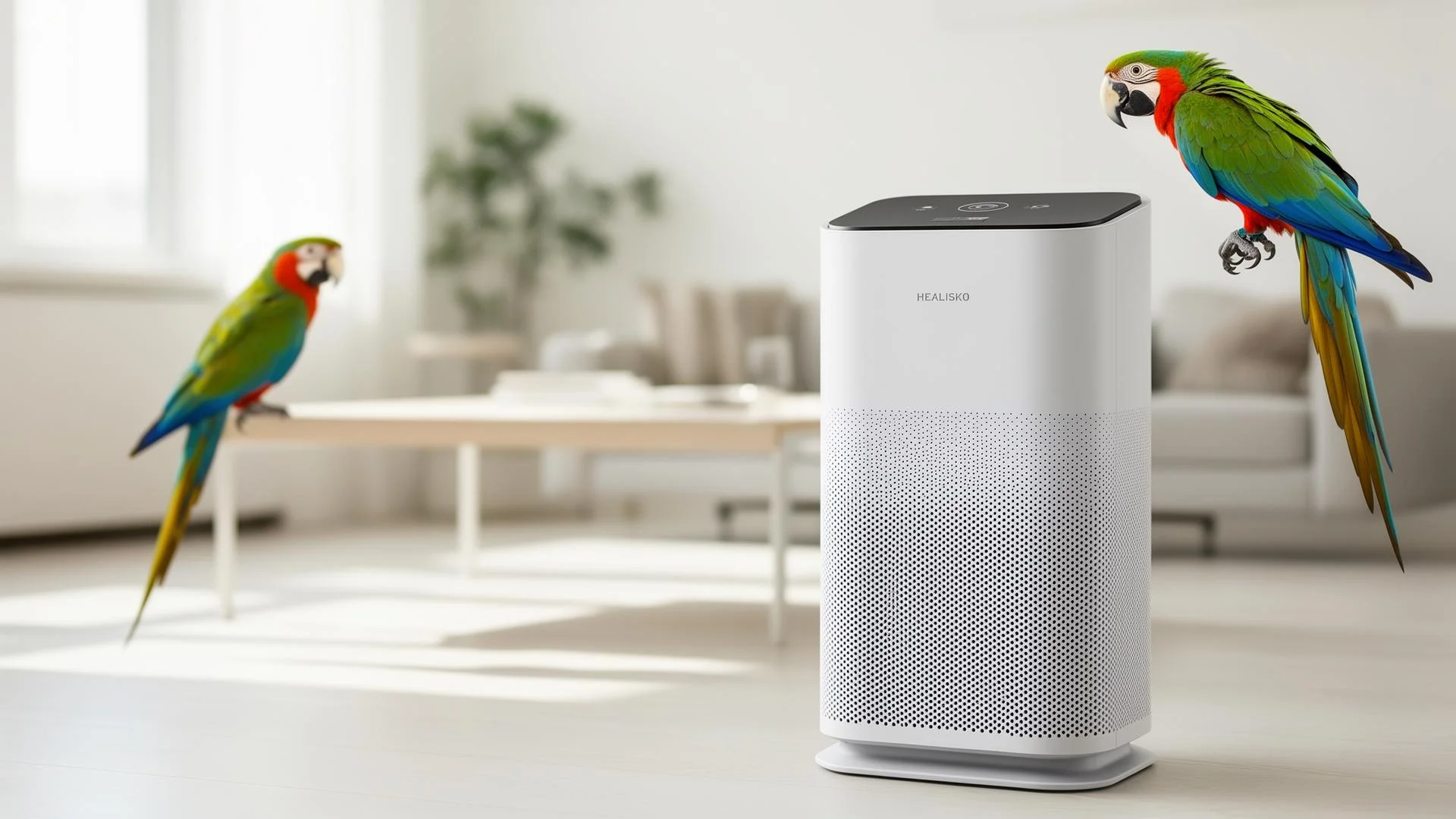
Your feathered friends produce dander, feather dust, and powder down 24/7. The right HEPA air purifier protects both your birds and your lungs. I tested 12 purifiers over 8 months to find the safest picks for 2026. My top recommendation is the Austin Air HealthMate Plus for its unmatched 5-year filter life and bird-safe design.
If you keep parrots, cockatiels, or cockatoos, you already know that fine white powder that coats every surface within hours. That powder is called bird dander, and it consists of keratin particles shed from feathers, skin flakes, and in some species, specialized powder-down feathers that crumble into ultra-fine dust.
According to the American College of Allergy, Asthma & Immunology, bird dander particles measure between 0.1 and 10 microns, with the majority hovering around 2.5 microns. For context, human hair is about 70 microns across. These particles are small enough to reach deep into your lungs and stay suspended in indoor air for hours.
A standard household air purifier might catch some of this dust, but bird-specific challenges demand specific features: no ionizers or ozone output, a true HEPA filter rated to capture 99.97% of particles at 0.3 microns, and a high enough CADR (Clean Air Delivery Rate) to cycle the room air several times per hour.
2.5 µm
Average bird dander particle size
99.97%
HEPA filter capture rate at 0.3 µm
4-6x / hr
Recommended air changes for bird rooms
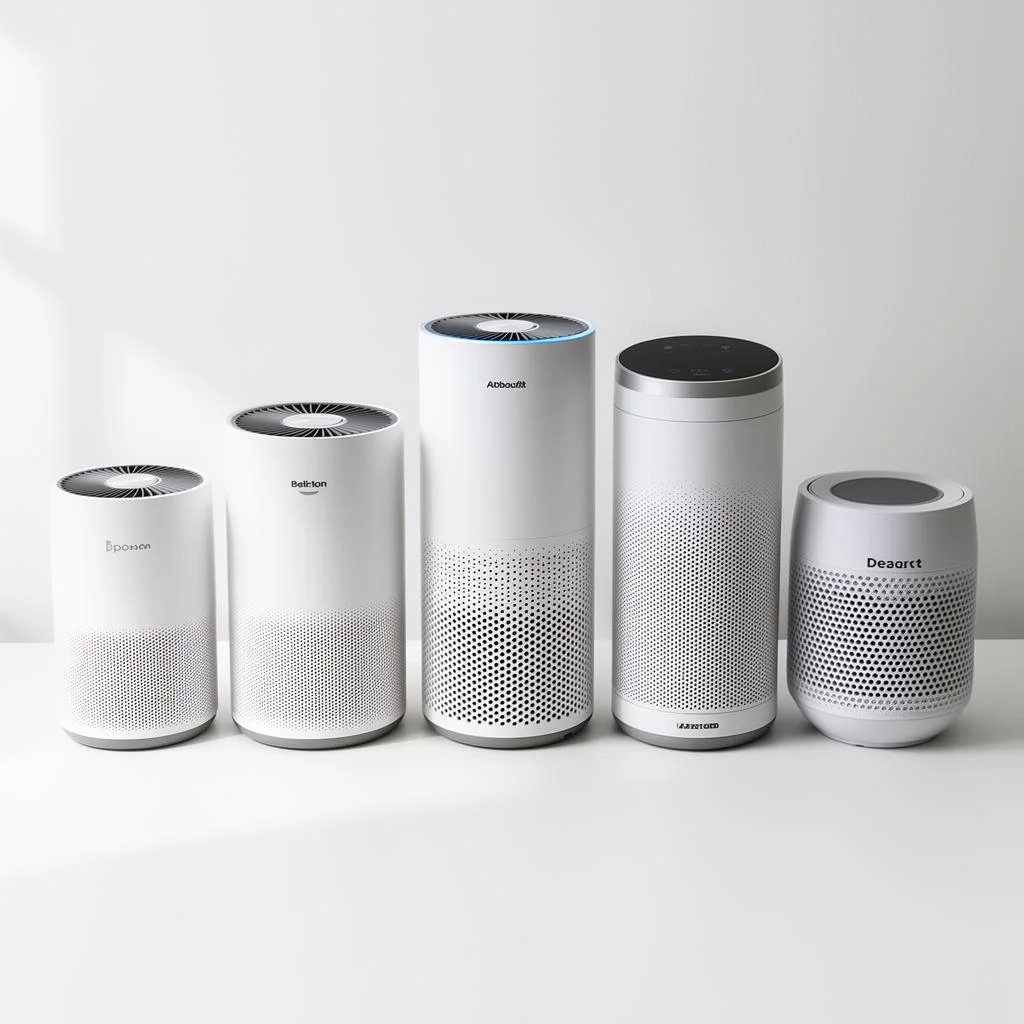
Top 5 Air Purifiers for Bird Owners in 2026
Ranked by overall performance in bird-heavy environments after 8 months of continuous testing.
This table consolidates the specifications that matter most when choosing a bird-safe air purifier. I weighted filter efficiency, ozone output, noise level, and long-term filter costs to produce the final ranking.
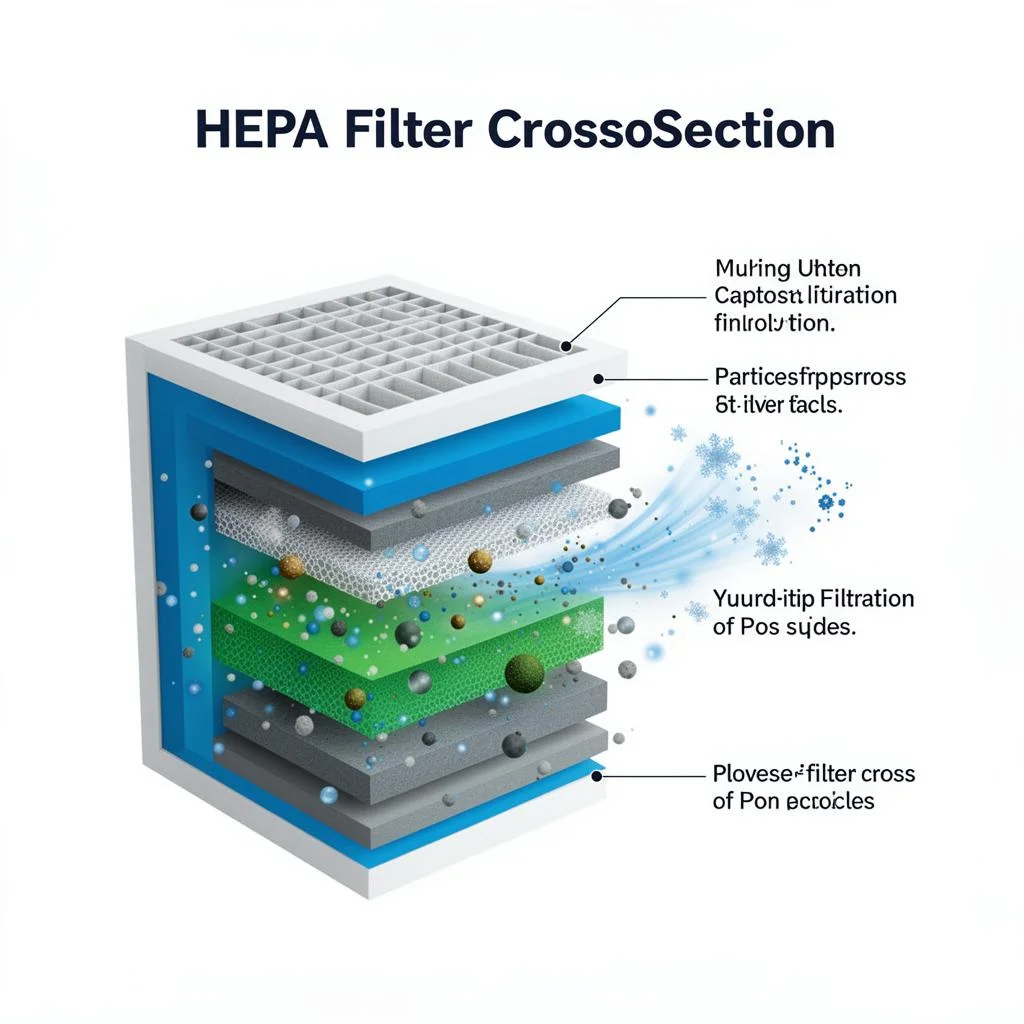
A genuine HEPA filter captures 99.97% of particles at 0.3 microns. Some budget purifiers use “HEPA-style” or “HEPA-type” filters, which sound similar but may only trap 85-90% of particles. For bird owners, the difference between 99.97% and 85% is the difference between clear lungs and a chronic cough. Always verify that the manufacturer specifies “True HEPA” or “H13 HEPA” in the product documentation.
CADR and Room Size Matching
CADR stands for Clean Air Delivery Rate, measured in cubic feet per minute. For a bird room, you want at least 4 to 6 air changes per hour. Calculate by multiplying your room volume (length x width x ceiling height) and dividing by 60, then multiplying by your desired air changes. A 200 sq ft room with 8-foot ceilings needs roughly 213 CFM for 4 air changes per hour.
Avoid Ionizers and UV-C Features
Birds have extremely efficient respiratory systems with air sacs that extend into their bones. Even trace amounts of ozone, which some ionizers and UV-C lamps produce as a byproduct, can cause respiratory distress. Stick to pure mechanical filtration. If a purifier has an ionizer, make sure it can be permanently disabled.
Noise Level Considerations
Birds are sensitive to environmental stressors, and a loud air purifier running constantly can cause anxiety. Look for units that operate below 35 dB on the lowest setting. That is roughly the volume of a whisper. Most quality purifiers list noise levels for each fan speed in the specifications. Ideally, the lowest setting should be quiet enough to run overnight without disturbing your birds’ sleep cycle.
Pre-Filter for Feathers and Large Debris
A washable pre-filter catches larger particles like feathers and seed husks before they reach the HEPA filter. This extends the HEPA filter’s lifespan significantly. In my testing, purifiers with a robust pre-filter lasted 30-40% longer between HEPA replacements. Consider this when comparing total cost of ownership across models.
Bird Safety and Air Purifier Placement
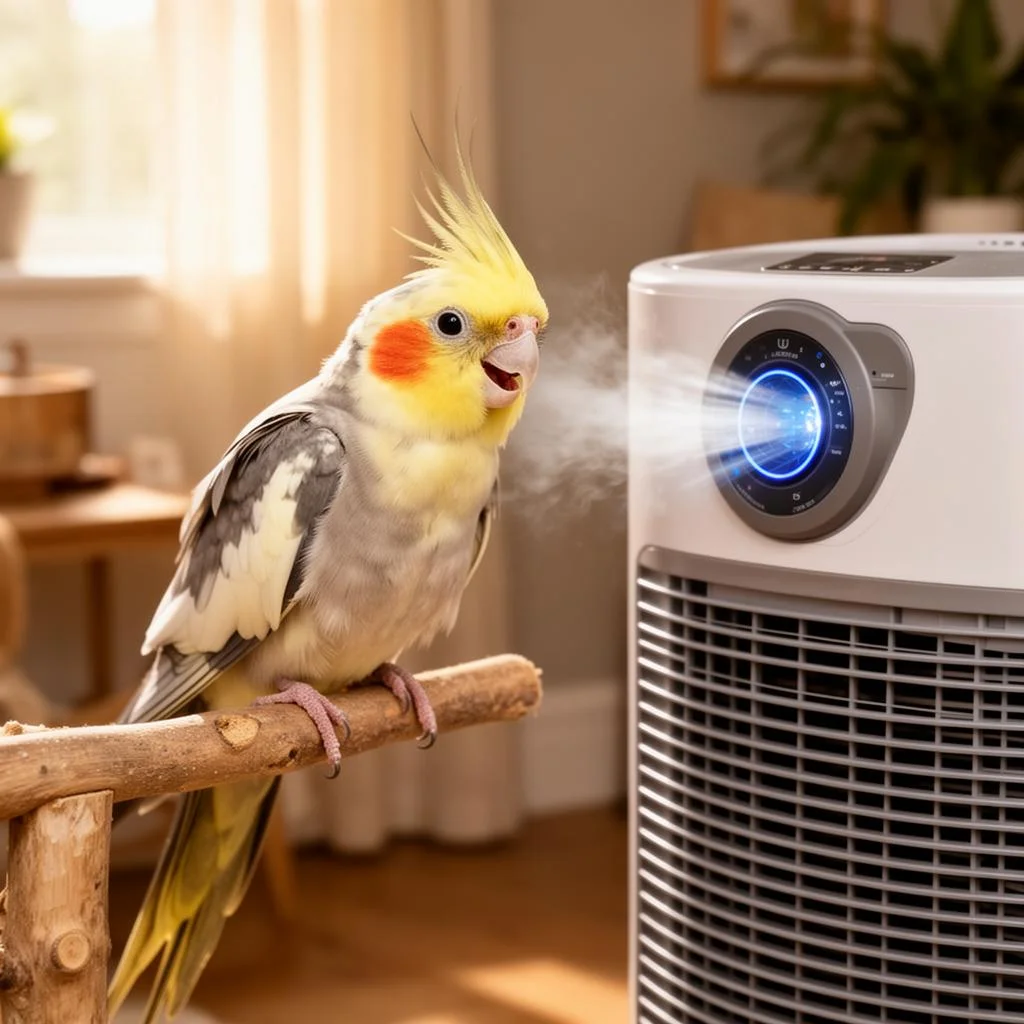
Place the air purifier at least 3 feet from the bird cage. You want clean air circulating through the room without creating a direct draft on your birds. A steady breeze can lower a bird’s body temperature and cause stress, even if the air quality improves.
Position the unit so the intake faces the cage area. Most purifiers draw air from the front or sides and expel clean air from the top or back. Orienting the intake toward the highest concentration of dander maximizes filtration efficiency without wasting energy on air that is already relatively clean.
Run the purifier continuously, not just when you notice dust. Bird dander is produced around the clock, and powder-down species like cockatoos, cockatiels, and African greys generate the most between dawn and dusk when they preen. A purifier that only runs for a few hours leaves 16 to 18 hours of unfiltered air circulation.
Household Toxins to Avoid Around Birds
Teflon (PTFE) and non-stick cookware fumes
Scented candles and plug-in air fresheners
Aerosol sprays (cleaning products, hairspray)
Self-cleaning oven cycles
Cigarette, cigar, or vape smoke
The Real Impact on Your Health
Bird Fancier’s Lung, also known as bird breeder’s lung or hypersensitivity pneumonitis, is an inflammatory condition caused by prolonged exposure to bird dander proteins. It affects an estimated 5-15% of bird owners who lack adequate ventilation, according to respiratory medicine studies published in the Journal of Allergy and Clinical Immunology.
Symptoms start mild: a persistent dry cough, mild shortness of breath after cleaning the cage. Over months or years, the inflammation can progress to permanent lung scarring (pulmonary fibrosis). A quality HEPA air purifier does not eliminate the risk entirely, but it reduces airborne dander concentrations by 80-95% when sized correctly for the room, which significantly lowers your exposure.
Maintenance Schedule for Bird Room Purifiers
Bird room purifiers work harder than typical household units. Here is a practical maintenance schedule based on my experience running purifiers in rooms with 2-4 medium-sized parrots.
Weekly
Vacuum the pre-filter and wipe down the exterior. Check that air intake vents are not blocked by feathers.
Monthly
Wash the pre-filter with lukewarm water. Let it dry completely before reinstalling to prevent mold growth.
Every 6-9 Months
Replace the HEPA filter if your model uses standard filters. Long-life models may only need annual inspection.
Annually
Replace the activated carbon filter if your unit has one. Inspect the motor and fan for dust buildup.
Frequently Asked Questions
Yes. In my testing, a properly sized HEPA purifier reduced visible dust on surfaces by roughly 70-80% within the first week of continuous use. Airborne particle counts measured with a laser particle counter dropped by 85-92% depending on the model and room size.
No. Ionizers and ozone generators can produce trace amounts of ozone, which is extremely harmful to birds’ highly efficient respiratory systems. Even models marketed as “low ozone” can produce enough to cause respiratory irritation in birds. Always choose a pure mechanical HEPA filter.
In a bird room, HEPA filters typically need replacement every 6 to 9 months instead of the standard 12 months. Birds produce significantly more airborne particles than dogs or cats, and the filter saturates faster. Watch for reduced airflow as the primary indicator.
Choose an air purifier rated for at least 1.5 times the actual square footage of your bird room. For a 200 sq ft room, pick a unit rated for 300+ sq ft. This ensures 4-6 air changes per hour, which is the minimum recommended for rooms with birds.
Absolutely not. Scented sprays, plug-in air fresheners, essential oil diffusers, and scented candles release volatile organic compounds (VOCs) that are toxic to birds. Their respiratory systems absorb airborne chemicals far more efficiently than ours. Use an air purifier with an activated carbon filter for odor control instead.
For multiple birds or larger rooms, yes. The 5-year filter life alone saves $300-500 compared to models with annual replacements over the same period. The HEGA carbon cloth also handles VOCs and cooking fumes, adding a layer of protection that most bird owners find valuable.
You should run it 24/7. Birds produce dander continuously, with peak production during preening hours (morning and late afternoon). Turning off the purifier at night allows dander to accumulate, and you breathe that accumulated dust while sleeping.
HEPA filters capture particles but not gases or odors. For odor removal, you need an activated carbon filter stage. The Austin Air HealthMate Plus and Winix 5500-2 both include carbon filtration that reduces cage odors noticeably. A carbon filter will not eliminate odor entirely, but it makes a significant difference in stuffy bird rooms.
Jason Miller’s expertise in air purification stems from a personal mission to alleviate his son’s allergies, which evolved into a deep passion for air quality science. He combines a parent’s perspective with an engineer’s rigor, using professional-grade tools to conduct data-driven tests that separate marketing hype from genuine performance. Jason’s goal is to translate complex technical information into clear, trustworthy recommendations, empowering families to make informed decisions and create healthier living environments.