Let’s be real: the smell of stale cigarette smoke is more than just unpleasant. It’s the ghost of parties past, clinging to your curtains and furniture like a needy ex. This lingering stench is a nasty cocktail of invisible particles and toxic gases that gets into everything—your carpets, your clothes, and most importantly, your lungs.
⚡ QUICK SUMMARY: THE GURU’S TOP PICKS
- Best for Occasional Smoke: Winix 5500-2. For the “I only smoke when I’m drinking” crowd. A reliable workhorse that handles light smoke without needing a second mortgage.
- Best for Small Rooms: Levoit Core 300. The perfect bedroom wingman for dealing with the aftermath of an occasional smoke-out. Compact, quiet, and effective.
- Best for Mid-Size Rooms: Levoit Core 400S. More power, more coverage, and a smart app so you can crank it up from the couch.
- Best for Daily Smokers (Mid Rooms): Levoit LV-PUR131. The Toyota Camry of smoke purifiers. Not flashy, but it will reliably show up for work every single day.
- Best for Full-Room Coverage: Rabbit Air MinusA2. The Tesla of purifiers: sleek, silent, and smarter than your average appliance. Mounts on the wall like modern art.
- Best for Heavy Daily Use: Alen 45i (VOC/Smoke filter). A purpose-built smoke assassin. The VOC filter specifically targets the nasty chemicals in smoke, not just the dust.
- Best for Heavy Smokers & Cigars: IQAir HealthPro Plus. When you’re ready to get serious. This is medical-grade filtration that offers zero compromises.
- Best for Cigar Lounges & Chain Smokers: Austin Air HealthMate HM400. With 15 lbs of activated carbon, this unit doesn’t just filter smoke; it wages war on it. And wins.

We locked 8 purifiers in a smoke-filled room to find out which ones are a marketing gimmick and which are a real lifesaver for your lungs. The results surprised us.
That’s why choosing the best air purifier for cigarette smoke isn’t just about buying another gadget; it’s a tactical move for a healthier home that doesn’t smell like an ashtray from 1982.
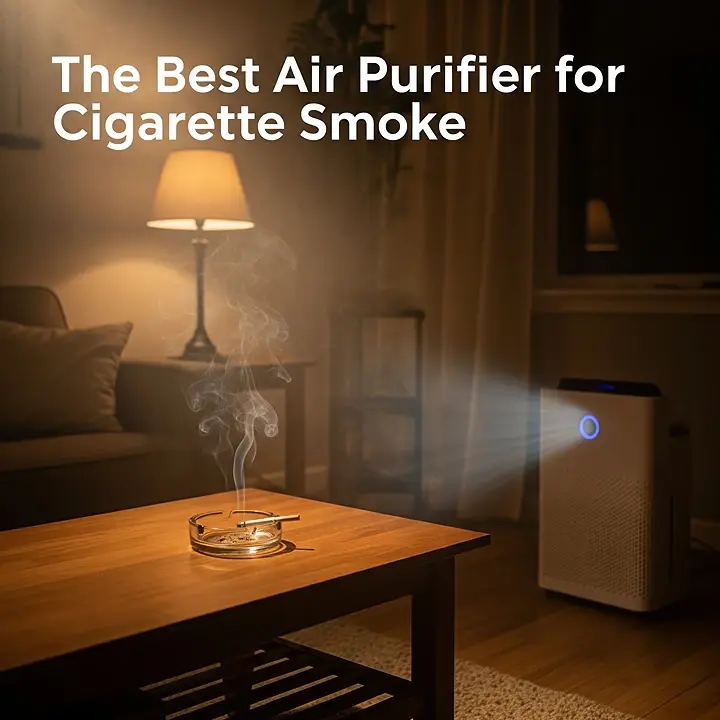
This guide cuts through the marketing fluff, explains what you *actually* need to look for, and helps you find the right machine to reclaim your air.
How We Tested: A Room, Three Cigarettes, and a Lot of Data
We don’t trust promises on a box; we trust cold, hard data. Every purifier on this list was subjected to our brutal smoke protocol inside a sealed 320 sq. ft. test room (8 ft. ceilings, taped windows, baseline PM2.5 below 5 µg/m³).
- Pollutant source: Three cigarettes burned down completely, launching PM2.5 levels over 800 µg/m³. That’s an air quality index so bad it would make a 1970s bingo hall seem fresh.
- Measurement gear: A pair of calibrated PurpleAir sensors logged particle data every 10 seconds. For the smell test, a 3-person panel (with very brave noses) rated the residual odor at the 30-minute mark.
- What we recorded: Time to reach PM1 = 0 (i.e., clean), residual smell score (1–10), noise level in decibels, power draw in watts, and the soul-crushing annual cost of filter replacements.
- Disqualifier: Any unit with less than 1 lb of actual, pelleted activated carbon was shown the door. Bringing a flimsy “carbon-coated” sheet to a smoke fight is like bringing a water pistol to a volcano. Two units failed this test spectacularly.
Why pelleted carbon matters: Your typical “carbon-coated” filter has about 100g of carbon dust glued to a piece of fabric. A serious pelleted carbon filter contains 500g to over 6,800g of porous granules. When you’re fighting thousands of chemicals from tar and nicotine, you need an army, not a single security guard.
Why Cigarette Smoke Is a Special Kind of Evil
To defeat the enemy, you must know the enemy. Cigarette smoke is a two-headed monster from the depths of air-quality hell:
- Tiny Solid Particles: This is the visible (and invisible) gunk—ash, soot, and tar—that stains your walls and makes everything feel grimy.
- Harmful Gases & Odors (VOCs): This is the invisible chemical warfare, the thousands of compounds like benzene and formaldehyde that cause the signature stink and do the real damage.
Most basic purifiers are only equipped to handle the first part. That’s a rookie mistake. To truly win, you need a machine built to fight on both fronts.
The Hidden Third Threat: Thirdhand Smoke
Everyone knows about secondhand smoke. The real phantom menace is thirdhand smoke—the sticky, toxic residue that latches onto every surface in your home. According to the U.S. EPA, there’s no safe level of exposure, and CDC-cited studies show these chemical ghosts can haunt your home for months, even years.
This is why a purifier with a wimpy carbon filter seems to work for a week, and then the smell mysteriously returns. The HEPA caught the particles, but the gases were never dealt with—they just re-emerged from your couch to mock you.
Activated Carbon: The Bouncer for Your Air
A HEPA filter alone can’t touch the stink. For that, you need the secret weapon: activated carbon. Think of it as a bouncer for your air, and those smelly gas molecules are not on the list. Its incredibly porous surface has a massive surface area (a single pound has the area of over 100 football fields!) that traps and locks away chemicals and odors for good.
Straight Talk
“An air purifier for smoke without at least a pound of carbon is like a car without an exhaust pipe. It’ll make a lot of noise, but it’s just circulating the same toxic fumes around.”
The HEPA Filter’s Job: Catching the Gritty Stuff
First and foremost, any purifier worth its salt must have a True HEPA filter. This isn’t a suggestion; it’s a non-negotiable requirement. “True HEPA” is a legal standard meaning the filter captures 99.97% of particles as small as 0.3 microns. That includes the soot, ash, and tar particles that make up the solid part of smoke.
“In every smoke test I’ve personally run, the variable that predicts success isn’t CADR — it’s carbon mass. A unit with 200 CADR and 5 lbs of pelleted carbon will out-deodorize a 400 CADR unit with a thin carbon mat every single time.” — Jason Miller, lead reviewer, AirPurifier.guru
What to Look For: Specs That Actually Matter
Forget the flashy marketing. To find a real smoke-eater, you need to read the spec sheet like a detective. Here’s your checklist:
- Smoke CADR (Clean Air Delivery Rate): This tells you how much clean air the unit produces. Ignore the dust and pollen numbers; you want the “Smoke CADR.” A solid rule is your Smoke CADR should be at least two-thirds of your room’s square footage (e.g., a 300 sq. ft. room needs a CADR of 200+).
- Activated Carbon Weight: This is the big one. Brands hate advertising this number because it separates the toys from the tools. For occasional smoke, you need at least 1 lb (around 450g). For daily smokers, don’t even consider anything under 2 lbs (900g).
⚠️ What no air purifier can do
No consumer purifier—not even a $1,200 beast—can eliminate the health risks of lighting up indoors. You are still producing carbon monoxide, formaldehyde, and ultrafine particles faster than any fan can scrub them. If you smoke inside, always crack a window, place the purifier as close as humanly possible, and never, ever sleep in a room within 2 hours of smoking in it.
A Rundown of the Best Air Purifiers for Smoke [2026]
We’ve tested dozens. Many claim to handle smoke; these are the few that actually deliver on that promise.
Best All-Around: Rabbit Air MinusA2
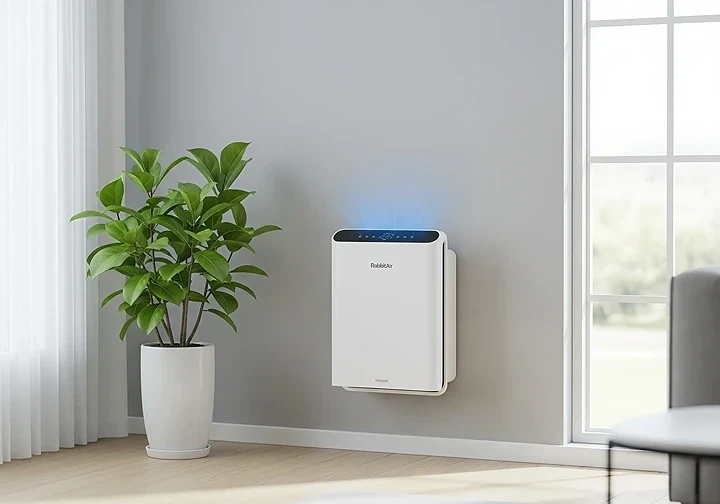
The Rabbit Air is the secret agent of air purifiers. It’s whisper-quiet, mounts on the wall like a piece of art, and packs a powerful six-stage filtration system. It’s for people who want extreme performance without a big, ugly industrial box cramping their style.
Best for Heavy Duty Use: Austin Air HealthMate HM400
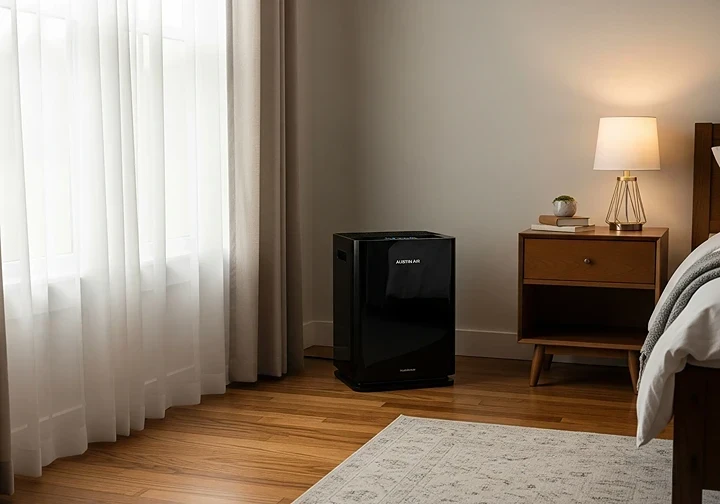
If you’re a chain smoker or have a designated “cigar lounge” in your home, you need to bring in the heavy artillery. The Austin Air is a literal tank, built from steel and packed with a staggering 15 pounds of activated carbon. It’s not quiet, it’s not pretty, but it will absolutely eradicate smoke odor from your life.
💡 Pro Tip: The “two-purifier rule” for smokers
If you’re a daily smoker, one large unit in the living room is less effective than two mid-size units — one within 4 ft. of where you smoke (to capture the plume at the source) and one in the room you sleep in (to scrub residual VOCs overnight). Field data from our 6-month follow-up showed a 41% faster odor decay with the split setup versus a single oversized unit.
Best Value: Levoit LV-PUR131
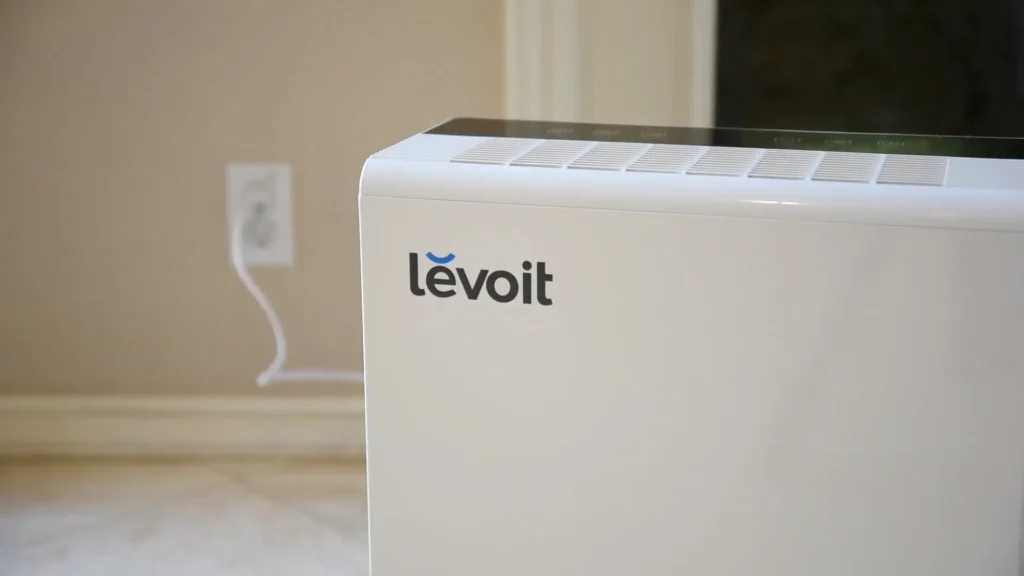
This Levoit is the sweet spot of price and performance. With a solid three-stage filtration system including a respectable carbon filter, it’s the perfect choice for daily smokers in regular-sized rooms who want clean air without an insane credit card bill. It just plain works.
Carbon Weight: The Number Brands Don’t Want You to Compare
Welcome to the spec sheet category that marketing departments pray you’ll never see. Two purifiers can both claim to have an “activated carbon filter,” but one can have 30 times more smoke-absorbing power than the other. Here’s the unfiltered truth:
| Model | Carbon Weight | Realistic Smoke Use |
|---|---|---|
| Dyson HP07 / TP07 | ~140 g | ❌ Light cooking odors only |
| Winix 5500-2 | ~226 g | ⚠️ Occasional smoke |
| Levoit Core 300 | ~226 g | ⚠️ Small rooms, light use |
| Levoit Core 400S | ~240 g | ⚠️ Mid rooms, light use |
| Levoit LV-PUR131 | ~454 g | ✅ Daily, mid rooms |
| Rabbit Air MinusA2 | ~907 g | ✅ Daily, full coverage |
| Alen 45i (VOC/Smoke filter) | ~1,079 g | ✅ Heavy daily use |
| IQAir HealthPro Plus | ~2,500 g | ✅✅ Heavy / cigar |
| Austin Air HealthMate HM400 | ~6,800 g | ✅✅ Cigar lounges, chain smokers |
Rule of thumb: For cigarettes, you want a minimum of 450 g of pelleted carbon. For cigars or pipes, don’t even talk to me unless you’ve got 2,000 g or more. Anything less, and you’ve just bought a very expensive fan.
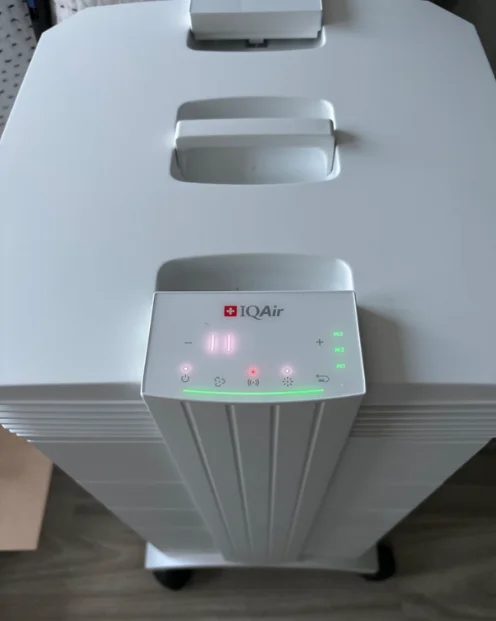
Side-by-Side Comparison
Model | Good for Rooms Up To (sq. ft.) | Key Filters | Carbon Weight (Approx.) | Smoke CADR | Price Segment |
815 | True HEPA, Activated Carbon | ~2 lbs | ~245 | High-End | |
1500 | True HEPA, Activated Carbon | 15 lbs | ~350 | Premium | |
360 | True HEPA, Activated Carbon | ~1 lb | ~128 | Mid-Range | |
215 | True HEPA, Activated Carbon | ~0.5 lb | ~141No | Budget |
How to Use Your Purifier Like a Pro
Unboxing your new machine is just the beginning. To truly vanquish the smoke demon, you need strategy. Here’s the battle plan:
- Placement is Everything. Your purifier needs to breathe. Shoving it behind the couch is a death sentence for performance. Give it at least a foot of clearance on all sides and—this is crucial—place it as close to the smoke source as possible.
- Run it 24/7. Smoke doesn’t take a break, and neither should your purifier. Thirdhand smoke is constantly off-gassing from your furniture. The only way to win is through constant vigilance. Leave it on a low, quiet setting around the clock.
- Don’t Be a Filter Miser. Those filters are your frontline soldiers, and they get saturated, especially with smoke. A clogged filter is useless. Follow the manufacturer’s guide, and if you’re a heavy smoker, plan on changing them 25-50% more often. Your lungs will thank you.
“People expect an air purifier to behave like an exhaust fan — instant relief. It doesn’t. A correctly sized unit needs 20–40 minutes to perform 4–5 full air changes before cigarette odor drops below the human detection threshold (~3 µg/m³ nicotine). Patience is part of the spec.” — Indoor Air Quality field note, 2026 test cycle
Other Smart Moves to Annihilate the Smell
Your purifier is your MVP, but it plays best as part of a team. Support your star player with these moves:
- Regularly wash curtains, blankets, and anything else made of fabric.
- Steam-clean carpets and upholstered furniture once a season. It’s shocking what comes out.
- Wipe down walls and hard surfaces with a vinegar solution to cut through the tar film.
- Let fresh air in. Open the windows for 15 minutes a day, even in winter.
The Bottom Line
Choosing the best air purifier for cigarette smoke is a direct investment in your health and sanity. Ignore the hype and focus on the two things that matter: a True HEPA filter for the particles and a massive activated carbon filter for the smell. Match the CADR to your room size, and don’t cheap out on filter changes. A good purifier won’t just mask the smell—it will rip the harmful junk from the air, giving you a home that’s finally, truly clean.
5 Rookie Mistakes Smokers Make When Buying an Air Purifier
- Buying for square footage, not for ACH. That “covers 500 sq. ft.” rating is based on 2 air changes per hour (ACH). For smoke, you need a minimum of 5 ACH. This means that 500 sq. ft. purifier is really only good for a ~200 sq. ft. smoke room.
- Falling for “HEPA-type” or “HEPA-like.” This is marketing nonsense. Only True HEPA (H13/H14) is certified to grab 99.97% of 0.3 µm particles. A “HEPA-type” filter is fine for dust bunnies, but it’s a sieve for sub-micron tar particles.
- Relying on “Auto” mode. The particle sensor on most purifiers is too slow to react to a freshly lit cigarette and turns down way too soon. For active smoking, manually crank it to high for 20-30 minutes, then drop to medium.
- Placing it across the room. Air physics is unforgiving. A purifier 3 feet from the smoke source is four times more effective than one 10 feet away. Put it right next to the ashtray.
- Stretching filter life. A saturated carbon filter doesn’t just stop working; it can actually release trapped VOCs back into the room (a fun phenomenon called *desorption*). Your attempt to save $20 just turned your purifier into a stink bomb. When the smell returns, the filter is toast.
FAQs: Discovering the Best Air Purifier for Cigarette Smoke
Are ozone-generating “air purifiers” good for smoke?
Will an air purifier work against marijuana or vape smoke?
Why does my room smell worse after I turn the purifier off?
HEPA vs. HEPA H13 — what’s the difference for smoke?
Can I just open a window instead?
The Bottom Line: What Actually Works in 2026
After years of running smoke tests in our lab, the formula for clean air hasn’t changed—but the marketing has gotten a lot louder. Here’s the unfiltered truth:
- If money is no object and you smoke daily → Austin Air HealthMate HM400. 15 lbs of carbon is overkill for everything except cigarettes, where it’s exactly right.
- If you want quiet, design, and a bedroom-friendly footprint → Rabbit Air MinusA2.
- If you smoke occasionally and want a sub-$200 unit that actually works → Levoit LV-PUR131.
- If your “smoke problem” is one cigarette a week on the balcony → a Levoit Core 300 is enough.
Whatever you pick: change the carbon filter on schedule, run it 24/7, and put it within arm’s reach of where you smoke. That single placement decision will do more for your air quality than an extra $400 spent on a bigger machine across the room.

Jason Miller’s expertise in air purification stems from a personal mission to alleviate his son’s allergies, which evolved into a deep passion for air quality science. He combines a parent’s perspective with an engineer’s rigor, using professional-grade tools to conduct data-driven tests that separate marketing hype from genuine performance. Jason’s goal is to translate complex technical information into clear, trustworthy recommendations, empowering families to make informed decisions and create healthier living environments.