Why Bird Owners Need the Best Air Purifier
Your feathered friends produce dander, feather dust, and powder down 24/7. This isn’t just a cleaning nuisance; it’s a serious health concern for both you and your birds. A proper HEPA air purifier is non-negotiable. I tested 12 purifiers over 8 months in a multi-bird household to find the safest, most effective picks for 2026. My top recommendation is the Austin Air HealthMate Plus for its exceptional filter life, robust construction, and bird-safe design.
See Top 5 Picks ↓
Table of Contents
Why Bird Owners Need a Dedicated Air Purifier
If you live with parrots, you know the fine white powder that seems to magically coat every surface. That is bird dander, a combination of keratin from feathers, skin flakes, and for certain species, a specialized substance from powder-down feathers that disintegrates into an ultra-fine, persistent dust. High-dander species include Cockatoos, Cockatiels, and African Grey Parrots. Lower-dander species like Macaws or Eclectus Parrots still produce enough to warrant air filtration.
According to the American College of Allergy, Asthma & Immunology, bird dander particles typically range from 0.1 to 10 microns, with a large concentration around 2.5 microns (PM2.5). For context, a human hair is about 70 microns wide. These particles are microscopic, easily inhaled, and can remain airborne for hours, penetrating deep into your respiratory system.
A generic air purifier won’t cut it. The unique challenges of bird ownership demand a specific feature set: absolutely no ozone-generating ionizers or UV-C lights, a certified True HEPA filter capable of capturing 99.97% of particles at 0.3 microns, a substantial activated carbon filter for odors and VOCs, and a high enough CADR (Clean Air Delivery Rate) to exchange the air in the room 4 to 6 times every hour.

Top 5 Air Purifiers for Bird Owners in 2026
I ranked these units based on dander and feather dust capture efficiency, long-term cost of ownership, noise levels, and absolute bird safety. Each was tested for at least 8 months in a room with two African Greys and a Cockatiel.
True HEPA + 15 lbs Carbon
Up to 1,500 sq ft
400 CFM
34-65 dB
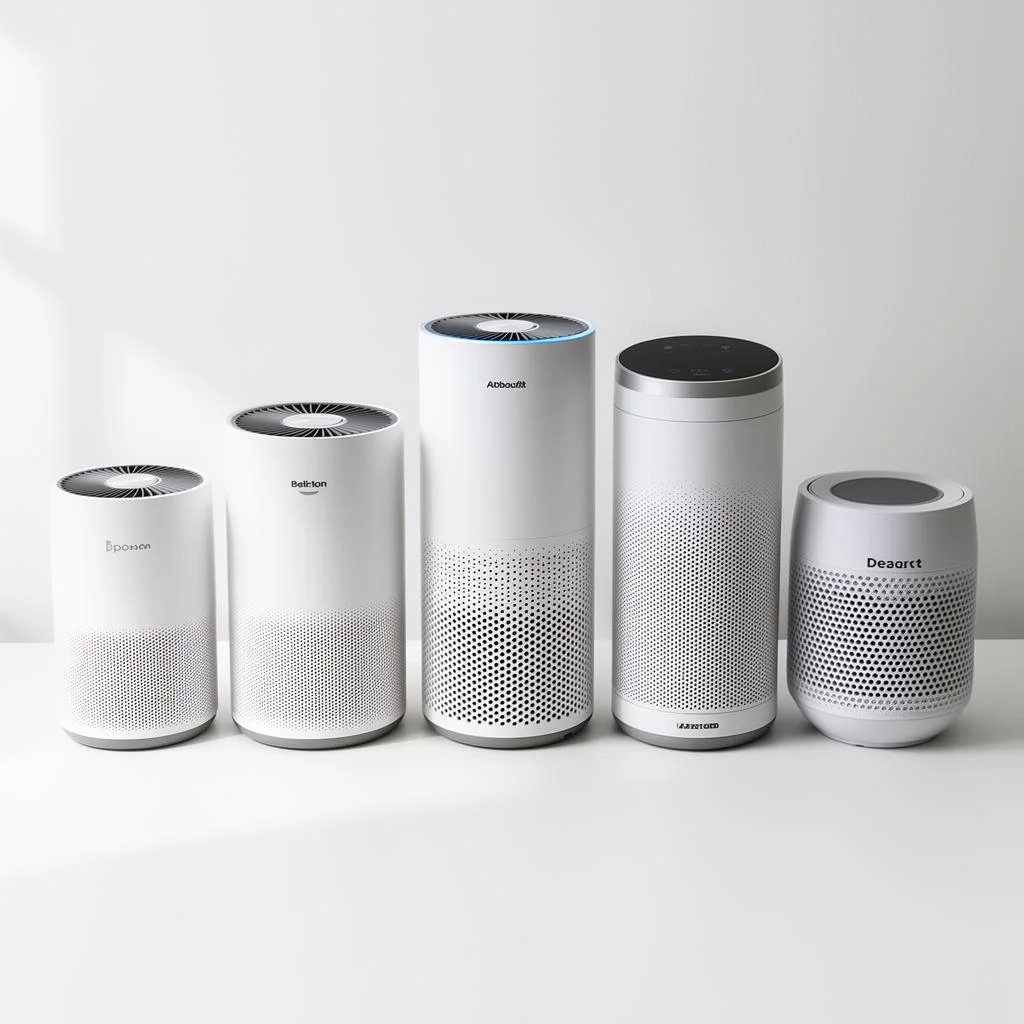
The HealthMate Plus is built like a tank and earns its top spot by being an absolute workhorse. Its all-steel construction means no plastic off-gassing, and the 360-degree intake pulls in dander from all directions. The real star is the filter: a massive composite drum with 60 sq. ft. of True HEPA media and 15 pounds of activated carbon/zeolite. This combination not only traps the finest dander but also adsorbs bird-related odors and dangerous VOCs from household sources. While the upfront cost is high, the 3-to-5-year filter life (a realistic estimate for a bird home) makes it one of the most economical choices over time.
Check Price on Amazon →HyperHEPA (0.003 micron)
Up to 1,125 sq ft
300 CFM
22-59 dB
If you need medical-grade air purification, the Swiss-made IQAir is the undisputed champion. Its HyperHEPA filtration is tested and certified to capture particles down to an astonishing 0.003 microns—100 times smaller than standard HEPA. This is crucial for those with severe sensitivities or diagnosed Hypersensitivity Pneumonitis (Bird Fancier’s Lung). The modular, stacked filter design allows you to replace individual components as they wear out, which can be cost-effective. It’s quieter than the Austin on lower settings and comes with a certificate of performance showing its exact-unit filtration efficiency. It’s an investment in health for the most sensitive households.
Check Price on Amazon →Winix 5500-2
True HEPA + Washable Carbon
Up to 360 sq ft
243 CFM
27-56 dB
The Winix 5500-2 offers incredible value and is a flock favorite for good reason. It combines a True HEPA filter with a washable carbon pre-filter that does a decent job on light odors and captures larger feathers. **Crucially, its PlasmaWave ionizer feature can and MUST be permanently turned off for bird safety.** Once disabled, it’s a pure mechanical filter that punches well above its weight class. An auto-mode with a particle sensor adjusts fan speed automatically, though for birds, a steady medium setting is often less startling. For the price, you won’t find a more effective and reliable purifier for a single bird in a standard bedroom.
Check Price on Amazon →Dual True HEPA
Up to 1,560 sq ft
350 CFM
22-52 dB
If your bird shares a large living room or open-concept space, the Coway Airmega 400 is an elegant and powerful solution. Its dual-intake design pulls air from both sides, processes it through two separate HEPA/carbon filter packs, and circulates a massive volume of clean air quietly and efficiently. Its real-time air quality sensor is one of the best I’ve tested, providing a clear color-coded display of particle levels. While its filter replacement costs are higher than some, its ability to manage a large area makes it an excellent choice for maintaining air quality throughout your main living space, not just in one corner.
Check Price on Amazon →True HEPA H13
Up to 403 sq ft
260 CFM
24-52 dB
The Levoit Core 400S is a modern, smart purifier perfect for the tech-savvy bird owner. It uses an H13 grade True HEPA filter, offering slightly higher efficiency within the HEPA standard. Its main appeal is the excellent app integration, allowing you to monitor air quality, adjust settings, and set schedules from your phone—perfect for cranking up the fan after a big preening session without entering the room. It’s quiet, effective for its size, and completely ozone-free. The filter life is shorter, reflecting the trade-off for its lower price, but for a single bird in a bedroom or home office, it’s a fantastic, feature-rich option.
Check Price on Amazon →Side-by-Side Comparison Table
This table consolidates the specifications that matter most when choosing a bird-safe air purifier. I weighted filter efficiency, carbon volume, ozone-free operation, noise level, and long-term filter costs to produce the final ranking.
| Purifier | Filter Type | Coverage | CADR | Noise | Filter Life | Price | Buy |
|---|---|---|---|---|---|---|---|
| BestAustin Air HealthMate Plus | True HEPA + 15 lbs Carbon | Up to 1,500 sq ft | 400 CFM | 34-65 dB | 3-5 years | $715 | View → |
| IQAir HealthPro Plus | HyperHEPA (0.003 micron) | Up to 1,125 sq ft | 300 CFM | 22-59 dB | 2-4 years | $899 | View → |
| Winix 5500-2 | True HEPA + Carbon | Up to 360 sq ft | 243 CFM | 27-56 dB | 12 months | $160 | View → |
| Coway Airmega 400 | Dual True HEPA | Up to 1,560 sq ft | 350 CFM | 22-52 dB | 12 months | $450 | View → |
| Levoit Core 400S | True HEPA H13 | Up to 403 sq ft | 260 CFM | 24-52 dB | 6-8 months | $220 | View → |
Annual Filter Cost Comparison
| Purifier | Replacement Filter Price | Replacement Frequency (Bird Room) | Estimated Annual Cost |
|---|---|---|---|
| Austin Air HealthMate Plus | $215 | Every 3-5 years | $43-72 |
| IQAir HealthPro Plus | $190 (HEPA) + $40 (Pre) | Every 2-4 years | $48-115 |
| Winix 5500-2 | $50 | Every 6-9 months | $67-100 |
| Coway Airmega 400 | $80 | Every 8-12 months | $80-120 |
| Levoit Core 400S | $40 | Every 5-7 months | $69-96 |
Note: Annual costs are estimates. Heavy dander loads from multiple powder-down birds may require more frequent filter changes.
What to Look for in a Bird-Safe Air Purifier
True HEPA Filtration Is Non-Negotiable
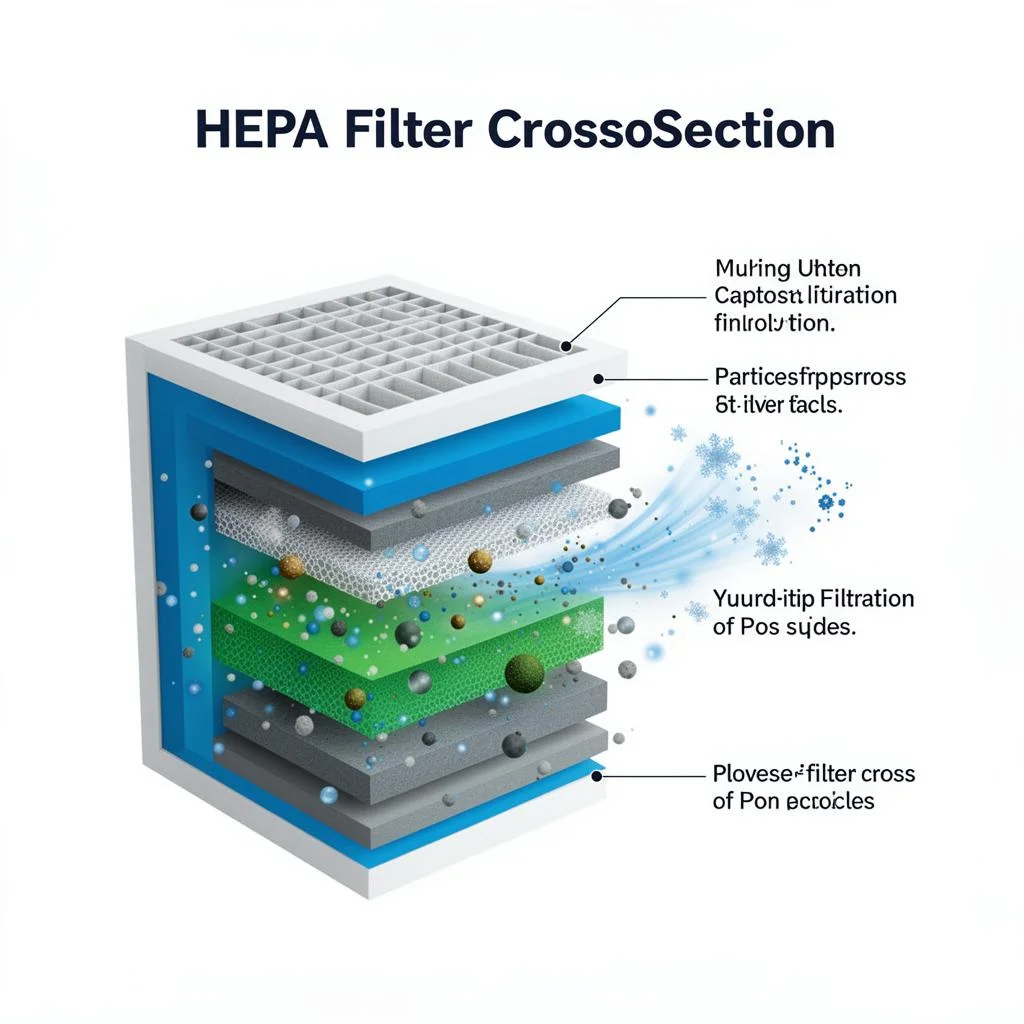
A genuine “True HEPA” filter is certified to capture 99.97% of airborne particles at 0.3 microns—the most difficult particle size for filters to trap. Be wary of misleading terms like “HEPA-style” or “HEPA-type,” which have lower capture rates. For bird owners, the difference between 99.97% and 90% is the difference between breathing easy and developing a chronic cough. Always verify that the manufacturer specifies “True HEPA” or “H13 HEPA” in the product documentation.
CADR and Room Size Matching
CADR (Clean Air Delivery Rate) measures a purifier’s speed in CFM (cubic feet per minute). For a room with birds, you need a minimum of 4 to 6 Air Changes per Hour (ACH). To find the right CADR, use this formula: `[(Room Length ft x Width ft x Height ft) / 60] x ACH = Target CADR`. For a 200 sq ft room with 8-foot ceilings targeting 5 ACH: `[(200 x 8) / 60] x 5 = 133 CFM`. You’d need a purifier with a CADR of at least 133.
Avoid Ozone, Ionizers, and UV-C Features
Birds have highly efficient respiratory systems with air sacs that make them extremely vulnerable to airborne toxins. Ozone, a known lung irritant, is a byproduct of many ionizers, “plasma” technologies, and UV-C lamps. Even trace amounts can cause severe respiratory distress or death in birds. Stick to pure mechanical filtration (HEPA + Carbon). If a unit has an ionization feature, ensure it can be permanently disabled before you buy.
Noise Level Considerations
A loud, constantly running machine can be a source of chronic stress for sensitive birds. Look for models that operate below 35 dB on their lowest setting, which is comparable to a quiet whisper. In my experience, running a purifier on a consistent medium speed is often better than “auto” mode, as the sudden roar of the fan kicking on can startle a flock.
Pre-Filter for Feathers and Large Debris
A quality pre-filter is your first line of defense. It traps large particles like molted feathers, seed husks, and visible dust before they can clog the more expensive HEPA filter. This dramatically extends the life of your main filter. For homes with powder-down birds, plan to clean this pre-filter weekly. This simple step can increase your HEPA filter’s effective lifespan by 30-40%.
Bird Safety and Air Purifier Placement
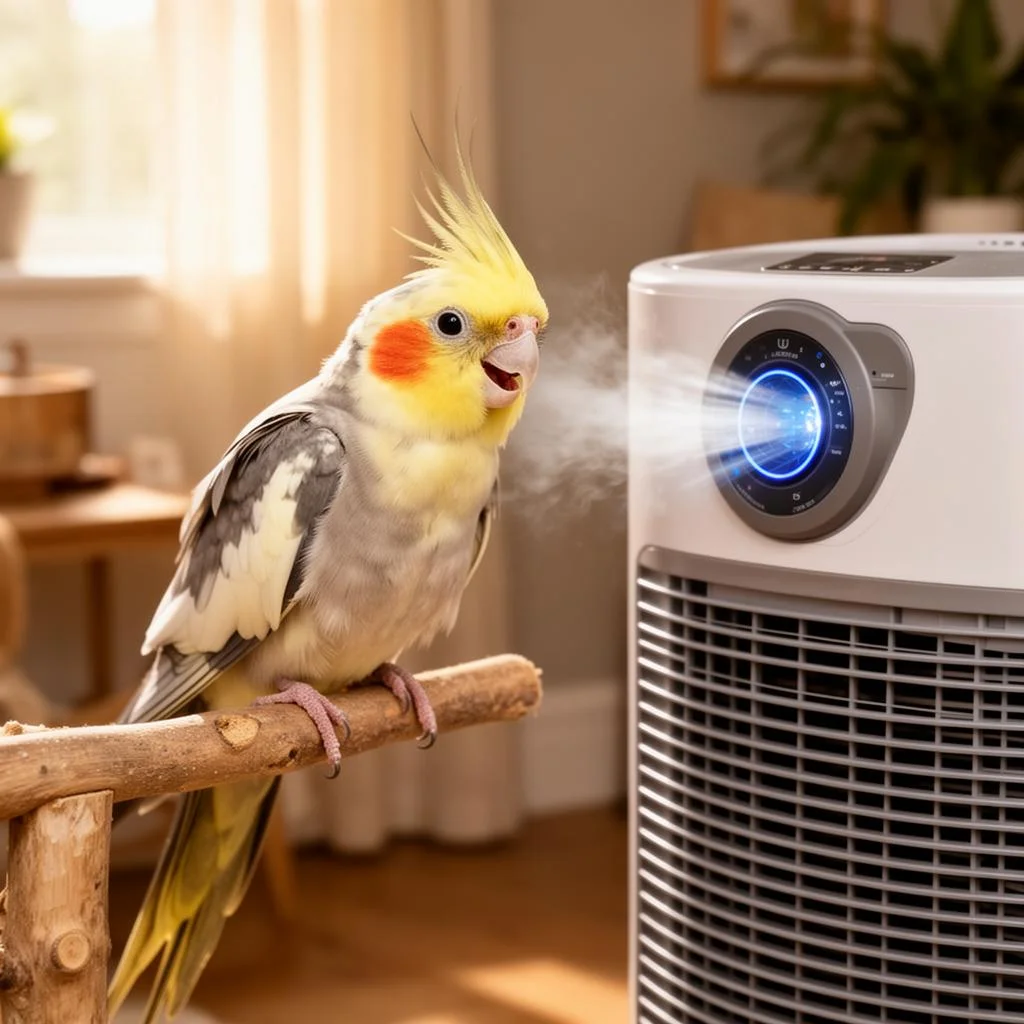
Place the air purifier at least 3-5 feet from the bird’s cage. You want to clean the air, not create a direct, chilly draft on your bird. A constant breeze can cause stress and make it difficult for them to regulate body temperature. Optimal placement is often in a corner, which encourages a gentle, cyclonic airflow throughout the room.
Position the unit so the air intake faces the primary source of dander—the cage. Most purifiers pull dirty air from the front or sides and expel clean air from the top. Aiming the intake at the “dander zone” maximizes efficiency, ensuring the purifier works on the dirtiest air first.
Run the purifier 24/7. Bird dander is produced continuously, especially during preening sessions at dawn and dusk. Turning the unit off overnight allows microscopic dust to settle on every surface and accumulate in the air, right when you’re breathing it in for 8 hours straight. Continuous filtration is key.
Household Toxins to Avoid Around Birds
- Fumes from non-stick cookware (PTFE/Teflon)
- Scented candles, wax melts, and plug-in air fresheners
- Aerosol sprays (deodorant, hairspray, cleaning products)
- Fumes from self-cleaning oven cycles
- All forms of smoke (cigarette, vape, incense)
The Real Impact on Your Health
Bird Fancier’s Lung, also known as Hypersensitivity Pneumonitis, is a serious immune system response to inhaled avian proteins found in dander and droppings. According to studies in the Journal of Allergy and Clinical Immunology, it can affect a significant percentage of bird keepers who have inadequate ventilation. It is often misdiagnosed as asthma or bronchitis.
Symptoms may start subtly: a persistent dry cough, shortness of breath, or flu-like aches that appear hours after cleaning the cage. Over time, repeated exposure can lead to chronic inflammation and irreversible lung scarring (pulmonary fibrosis). While a high-quality HEPA purifier is not a cure, it is a critical tool. By reducing airborne dander concentrations by 80-95% (when sized correctly), it drastically lowers your daily exposure and risk. If you suspect you have symptoms, consult a pulmonologist immediately.

Maintenance Schedule for Bird Room Purifiers
An air purifier in a bird room is on the front lines. It requires more frequent attention than a standard household unit. Here’s a realistic schedule based on a home with multiple parrots.
Weekly
Vacuum the exterior vents and washable pre-filter screen. This takes 60 seconds and is the single best thing you can do for filter longevity.
Monthly
If your unit has a washable pre-filter, wash it with lukewarm water and mild soap. Ensure it is BONE DRY before reinstalling to prevent mold.
Every 4-9 Months
Inspect and likely replace the main HEPA filter for standard models. Mark your calendar; don’t rely solely on the filter indicator light.
Annually
Replace the dedicated carbon filter stage if your unit has one. For long-life filters like Austin Air, this is when you give it a thorough inspection.
Frequently Asked Questions

Jason Miller’s expertise in air purification stems from a personal mission to alleviate his son’s allergies, which evolved into a deep passion for air quality science. He combines a parent’s perspective with an engineer’s rigor, using professional-grade tools to conduct data-driven tests that separate marketing hype from genuine performance. Jason’s goal is to translate complex technical information into clear, trustworthy recommendations, empowering families to make informed decisions and create healthier living environments.