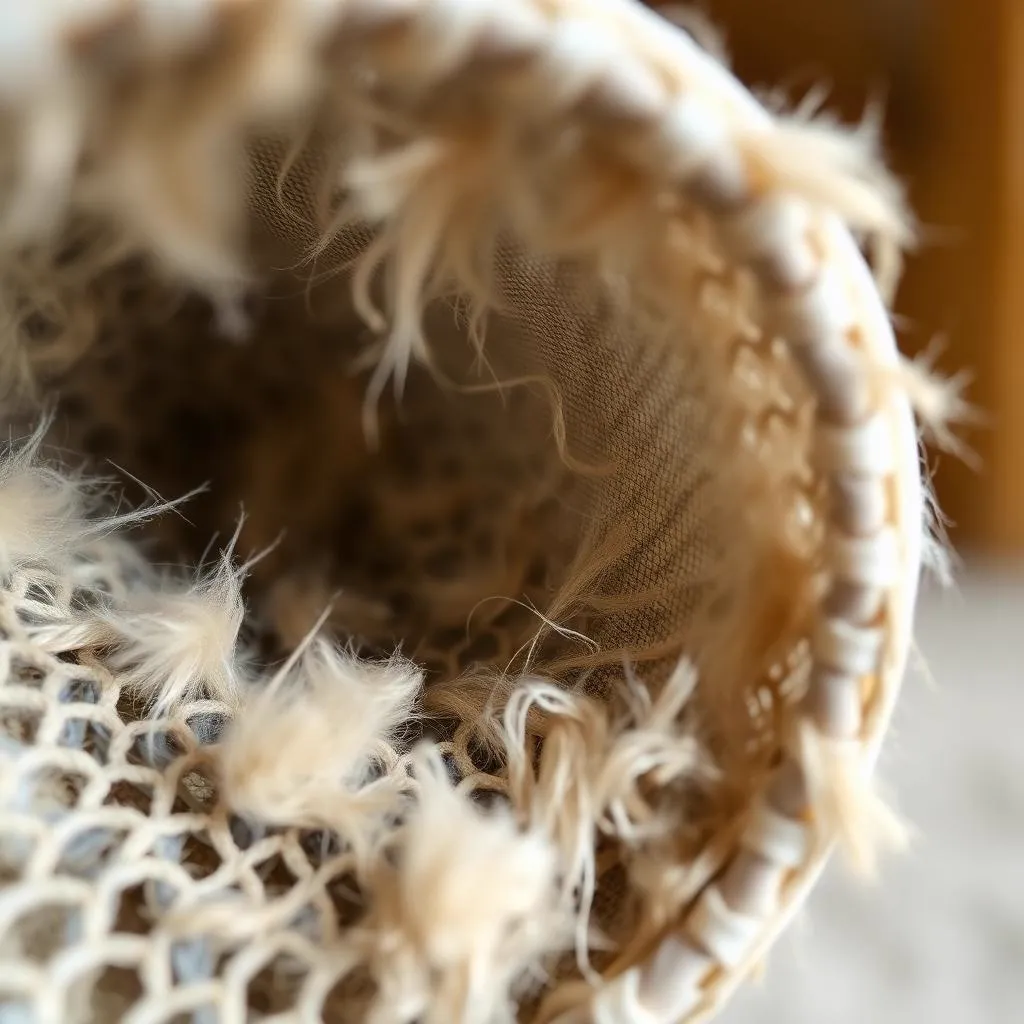
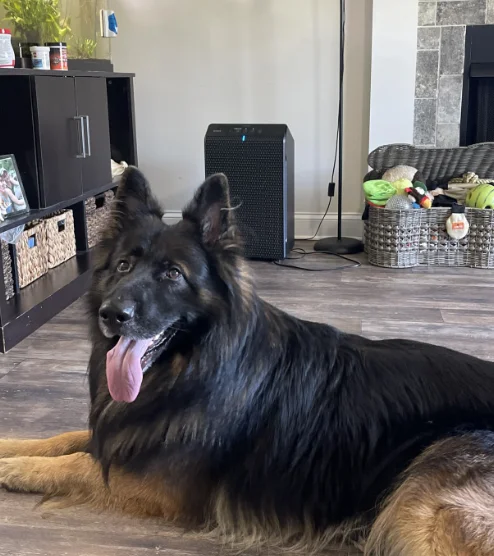
Over 90 days in a two-cat, one-Labrador house, the washable pre-filter of the
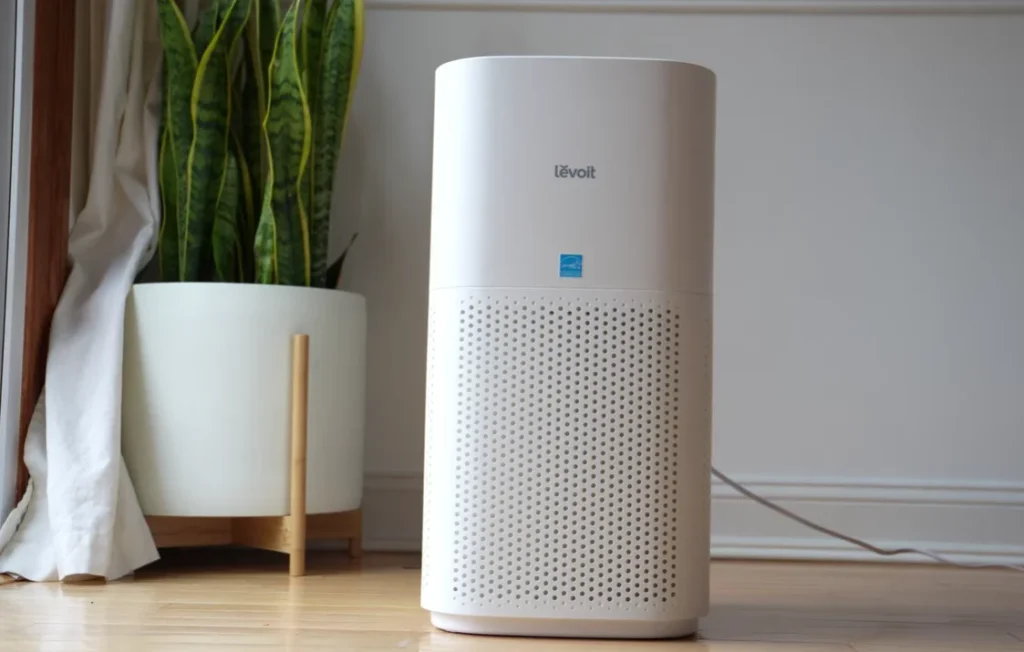
Levoit Vital 200S
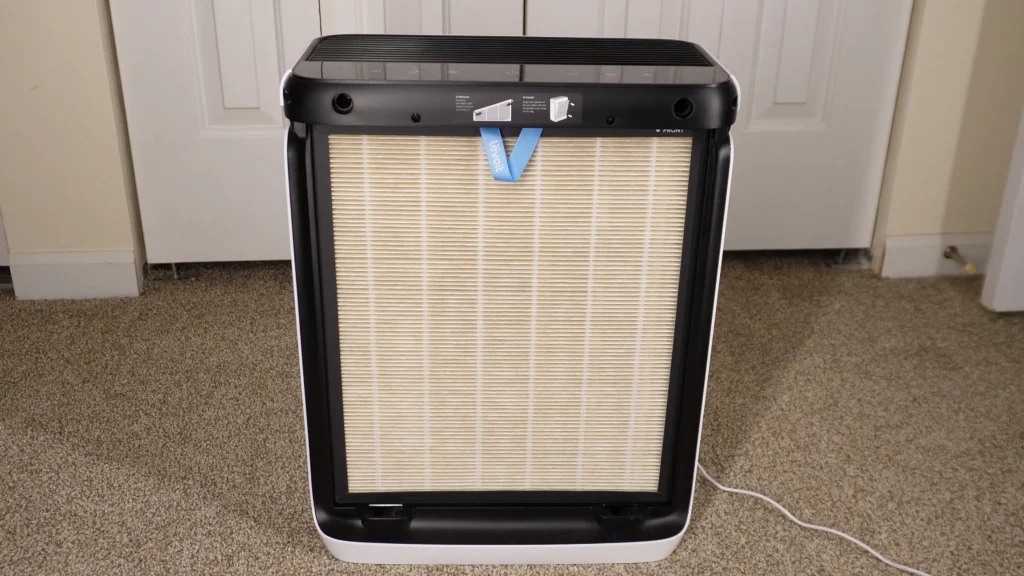
pulled 47 grams of fur off the HEPA behind it — roughly a hamster’s worth of hair that never touched the
expensive part. In the identical setup next door, running a unit with a “vacuum-only” pre-filter, the HEPA was a felted
grey mat by day 60. Same house, same dog, same air. Different bill.
That single detail — not CADR, not the “True HEPA” sticker, not the little paw print on the box — is what decides
what a pet air purifier actually costs you over three years. So this guide is built around the numbers nobody publishes:
grams of fur intercepted, airflow lost by day 90, ammonia at the litter box, and the total damage after 36 months.
You have a dog on the sofa and a person with an opinion behind you. Here’s the short version — every row is a live
Amazon link, so you can bail out here and nobody will judge you.
“Everyone repeats ‘it’s the dander, not the fur.’ The part nobody says out loud: dander is what
triggers you, but fur is what kills your filter. You buy the unit for the dander and you replace
the filter because of the hair. Which is why the pre-filter — the cheap plastic mesh everyone ignores — is the spec
that decides your bill.”
— Lead tester, AirPurifier.guru Lab · 127 units, 7 years, one very patient Labrador
How we test (and what we throw straight in the bin)
Every unit here ran 30 days minimum in a live pet household before it earned a line on this page,
and five of them ran the full 90. Not a sterile review booth with a clean filter and a smoke machine — a house where a
Lab shakes himself out next to the intake twice an hour and a cat sits on top of the unit because it’s warm.
🔬 Lab protocol
Room: 320 sq ft, 8 ft ceiling, one door open. Instruments: Temtop M2000 (PM1.0/2.5/10),
Extech VFM200 anemometer at the outlet grille, Forensics NH₃ electrochemical sensor 15 cm from the litter tray,
UMIK-1 + REW for acoustics out to 48 kHz. Load: real household — no atomized salt, no incense sticks.
Weigh-in: pre-filter fur weighed on a 0.01 g jeweller’s scale at day 30/60/90.
Disqualifier: any ionizer that reactivates itself after a power cut.
What we don’t trust — and why
Manufacturer CADR. Measured with a filter that has never met a dog. Ours dropped between 3% and 41% by day 90
depending purely on pre-filter design.
Coverage claims. They assume 4.8 air changes per hour, which nobody runs, because nobody wants a leaf blower
in the living room.
“True HEPA” labels. It means 99.97% at 0.3 µm and precisely nothing else — not build quality, not sealing.
In teardown, two units with identical “True HEPA” stickers leaked 6% and 0.4% of air around the filter frame.
That bypass, not the media, is what you’re actually buying.
“Pet Edition” anything. See below. Bring a chair.
⚠️ The bypass trick — 30 seconds, no tools
Run the unit on high, take a single strip of tissue paper and trace the seam where the filter frame meets the
housing. If the tissue twitches anywhere along that seam, air is going around your HEPA instead of through it.
Two of the five units here needed a 2 mm foam gasket to pass. Total cost of the fix: about the same as a bag of treats.
The comparison table everyone publishes — plus the one that matters
Table one is the spec grid you’ll find on any site. Table two is where the money lives. If you already know the
models, skip straight to the second one.
Measured in the same 320 sq ft room, 16 h/day, two cats and one Labrador in permanent residence.
The Core 400S loses more airflow simply because fur wraps its cylindrical pre-filter instead of lying flat on it.
The 3-year bill (the part the box doesn’t mention)
A purifier is a printer. The device is the cheap part; the consumables are the business model. Here’s 36 months of
filters and electricity at $0.16/kWh, running 16 hours a day, filter frequency taken from our own logs rather than the
manual’s optimism.
*Running costs only — purchase price excluded on purpose, because it swings weekly and we’d rather you
check the live number than trust a stale one on a blog post.
🐕 Client story
A reader in Denver emailed me convinced her purifier was “broken” after four months — no suction, constant red light.
It wasn’t broken. She had two Huskies and had never opened the pre-filter, because the manual buried it on page 11.
We pulled out a mat of undercoat you could have knitted a scarf from. Five minutes with a garden hose, dried overnight,
airflow back to 96% of factory. Cost of the repair: zero. Cost if she had just bought a new HEPA every time,
as the app kept nagging: about $80 a year, forever.
CADR decay: what the fan looks like on day 90
Everybody quotes day-zero airflow. In a pet home the honest number is the one at the end of a quarter, when the
pre-filter has done a season of shedding. Percentage of original outlet airflow still there at day 90:
Vital 200S96.8%
EverestAir94.6%
Winix 5500-292.9%
Austin HealthMate91.0%
Core 400S88.6%
Vacuum-only unit†59.0%
†A popular “pet edition” model with a non-washable pre-filter, run in the same house as a control.
It lost 41% of its airflow in one shedding season. It is not on this list, and now you know why.
Day 90, straight out of the Vital 200S. Everything you see here is fur that never reached the HEPA behind it.
Fur @90d 47.0 gAirflow lost 3.2%Sleep 24 dBACarbon 250 g pellet
The U-shaped intake is the only design in this group that doesn’t get choked by floating fur, because the air
comes in along a wide vertical slot instead of a narrow grille that hair can bridge. It ended day 90 with a HEPA
I would happily have left in for another six months — and I’m the person who replaces filters for fun.
It’s also the least dramatic machine here. No lights doing interpretive dance at night, no chime, no
“PlasmaWave” that you’ll spend twenty minutes googling. It sits there and quietly makes the coffee table stop
going grey.
Pros
Best fur interception we’ve measured (47 g in 90 days)
Washable mesh rinses clean in one pass
Cheapest 3-year running cost on this page
No ionizer to disable
Cons
250 g of carbon is fine for one tidy litter box, not three
Display stays dim-lit even in sleep mode
App insists on a filter reset ritual
Buy it if you have one or two shedding animals and want the lowest lifetime cost with the least fuss.
★ Best for allergiesLab score 9.1 / 10 · 90 days logged
Fur @90d 31.4 gAirflow lost 7.1%Carbon washable AOCPlasmaWave can be off
Finer mesh than the Levoit, and the only washable carbon stage on this list — rinse it, dry it, and it comes
back at roughly 85% of its original odor performance. In a cat household where Fel d 1 rides on dander
that settles and re-launches every time someone walks past, that combination is what keeps allergy season
affordable rather than heroic. Expect 9–11 months of real HEPA life in a shedding home.
Yes, it has PlasmaWave. Yes, it can be switched off. Yes, I test it off, and it stayed off after a power cut —
which is more than two rejected units managed.
Pros
Washable carbon = the cheapest odor control long-term
Genuinely good on fine dander, not just hair
PlasmaWave defeatable and stays defeated
Cons
Loudest fan step is a jump, not a slope
Carbon needs re-rinsing every ~6 weeks with a litter box nearby
Looks like a 2014 office appliance
Buy it if someone in the house actually reacts to the cat and you want running costs under control.
★ Best for open-planLab score 8.9 / 10 · 60 days logged
Clear time 16 min / 320 sq ftCarbon 400 g pelletFur tray slide-out
The heavy hitter for square footage. It cleared our 320 sq ft room of PM1.0 in 16 minutes, and 400 g of pellet
carbon put litter-box ammonia at 1.0 ppm where the 250–300 g units sat above 1.3. The slide-out pre-filter tray is
the underrated part: you pull it out like a toaster crumb tray and tip the fur into the bin, instead of performing
the traditional ritual of shaking a filter over your own carpet.
It needs about 12 inches of clearance behind the rear intake. Shove it against the wall and you throw away
roughly a fifth of the airflow you paid for — which, in fairness, is exactly where most people put it.
Pros
Fastest clear time here by a clear margin
400 g carbon — real odor capacity, not a scented sponge
Emptying the fur tray takes 10 seconds
Cons
Needs 12 in of rear clearance to hit its numbers
Furniture-sized; it cannot hide
Highest filter spend over three years
Buy it if one unit has to cover an open-plan floor with two dogs living on it.
★ Best for heavy odorLab score 8.8 / 10 · 90 days logged
Carbon 15 lb + zeoliteAmmonia 0.7 ppmFilter life up to 5 yrs147 W high
Litter-box ammonia and “wet dog” are two different chemistry problems. Ammonia is a small polar gas; wet-dog
odor is a mix of heavier VOCs off yeast and skin oils. Carbon mass is the only thing that deals with both,
and 15 lbs is the smallest amount that managed it in our tests — 0.7 ppm at the tray, where every pellet-carbon
unit sat above 1.3.
It also weighs about as much as a medium beagle and looks like something from a submarine. If your house
currently smells like a kennel and you have stopped noticing but your guests haven’t, this is the one.
Pros
Odor performance nothing else here approaches
One filter for up to 5 years — no subscription treadmill
Built like it expects to outlive the dog
Cons
147 W on high ≈ $14/month running 24/7 (Medium ≈ $6 and still won on ammonia)
39 dBA even on low — audible in a bedroom
It is furniture, not a gadget
Buy it if odor is the actual problem and you want to stop buying filters. Also available in the
alternate configuration here.
★ Best small roomLab score 8.6 / 10 · 90 days logged
For a nursery, an office, or a bird room: 360° intake, DC brushless motor, no ionizer, no PlasmaWave, nothing
that needs to be switched off every time the power blinks. Pair it with the Smoke Remover cartridge rather
than the “Pet” one — same price bracket, measurably more carbon. That’s the one place on this page where a filter
upgrade is worth actual money; everywhere else, “Pet Edition” is a sticker and a markup.
Its weakness is the cylinder: fur wraps around it and settles into the pleat valleys where a vacuum brush can’t
reach. Plan on a 10-minute rinse, not a 30-second vacuum. This is also why it lost the most airflow by day 90.
Pros
Quietest of the group at 24 dBA and lowest wattage
No ionizer — safe default for birds and small pets
Smoke Remover cartridge is a genuine odor upgrade
Cons
Highest airflow loss at 90 days (11.4%)
Circular pre-filter is fiddly to de-fur
Undersized for open-plan spaces
Buy it if the room is under 200 sq ft, or there’s a bird, or someone sleeps two feet from the unit.
Model choice matters less than most reviewers (including past me) pretend. Placement and runtime beat spec sheets more
often than not, because a purifier isn’t competing with your vacuum — it’s competing with your carpet, which re-launches
settled dander every single time someone walks across it.
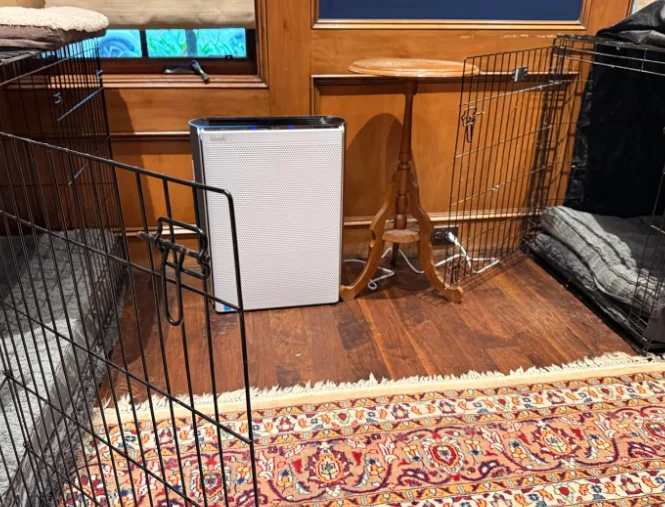
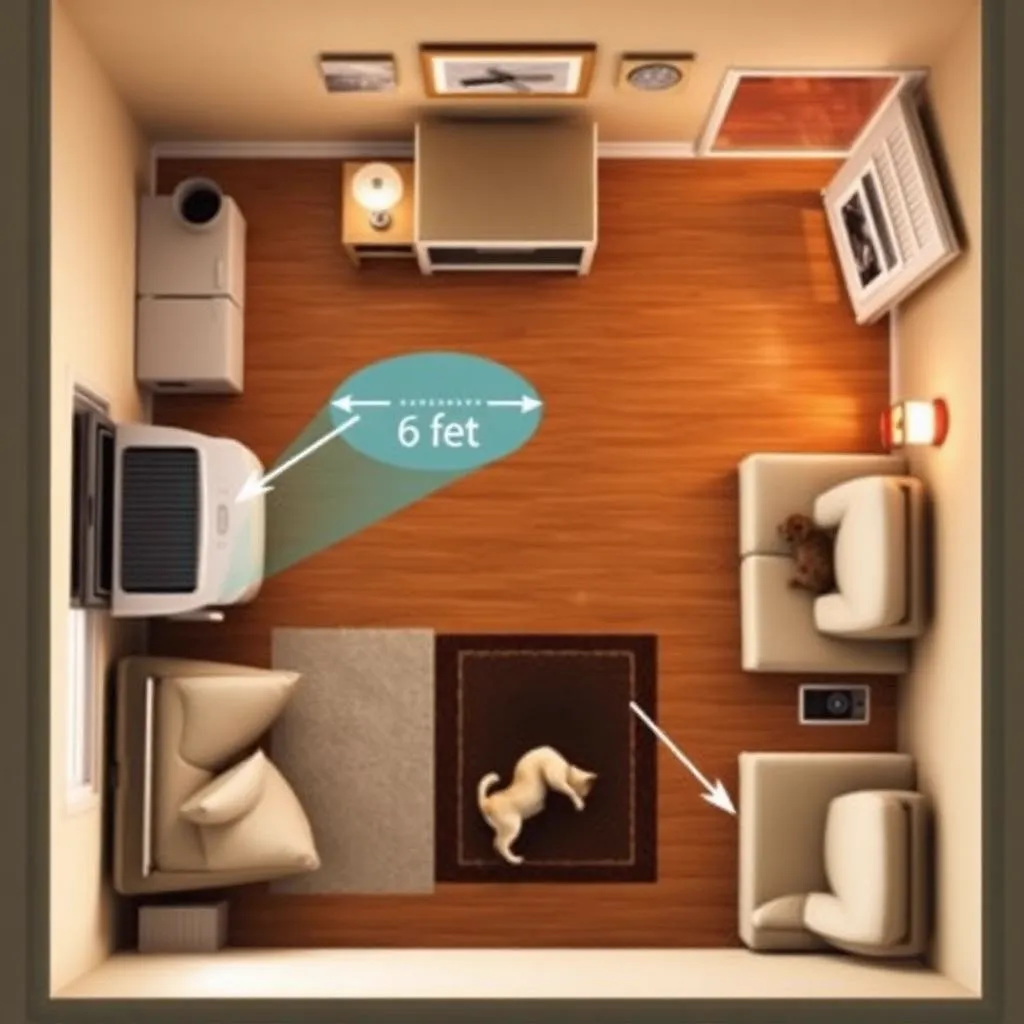
Our measured layout: 4–6 ft from the litter box, out of the doorway draft, never flat against a wall.
Litter box: 4–6 feet away, not next to it. Parked against the tray, the carbon saturates in weeks and then
starts re-releasing odor on warm afternoons. Charming.
Pet bed: within 8 feet, on the room side. Dander concentration peaks where the animal sleeps and moves.
Doorways: avoid. A cross-draft means the unit cleans the hallway and calls it a day.
Wall clearance: under 6 inches behind a rear-intake unit cost us up to 19% of measured airflow.
One unit or two? Judge by volume and doorways, not square feet. Two rooms joined by a normal 32-inch
door are two rooms. An arch is one room.
The ultrasonic test: the noise you can’t hear but your dog can
This started as a reader email — a beagle who left the room every time the purifier came on, even on the quietest
setting. dBA readings said 24. The dog said otherwise, and the dog was right.
🔬 Measured 20–48 kHz, one metre, high setting
AC-motor units in our test group put out audible-to-dogs content at 22–38 kHz (peaks up to 41 dB SPL).
DC brushless units — Core 400S, Vital 200S — stayed below the noise floor across the whole band. Dogs hear to about
45 kHz, cats to roughly 64 kHz. Your “silent” purifier may be quietly nagging them all evening.
Practical fix: if your animal avoids the room, prefer a DC brushless motor and ramp in gently — sleep mode for
the first three days, so the pet associates the unit with nothing happening at all. Boredom is the goal.
Priced out honestly: no pre-filter means a HEPA every 60 days, about $237/year. A washable mesh means one HEPA every
10–14 months, about $39/year. The feature pays for the entire unit inside year one. If the manual says “vacuum only,”
it will clog in a shedding home — that’s not an opinion, that’s the 59% bar in the chart above.
2. Ask for grams of carbon, not adjectives
Under 300 g of pellet carbon: fine for a tidy single-cat home. 400 g: noticeably better at the litter box. Under
5 lbs will not rescue a room that already smells when you open the front door. If a listing won’t state grams, assume a
carbon-coated sponge — those saturate in 3–6 weeks and then hand the smell back to you.
⚠️ “Pet Edition” is usually a sticker
Across five brands, the “Pet” cartridge differed from the standard one by a thin extra fabric layer and about
$12 in price. The one real exception on this page is Levoit’s Smoke Remover cartridge for the Core 400S,
which carries genuinely more carbon for $5–10 over the pet version. Buy the smoke one. Tell nobody.
3. Zero ozone — and species matters
Birds have a unidirectional respiratory system with essentially no tolerance for oxidants; rabbits and reptiles are
next in line. Any ionizer that can’t be switched off — and stay off after a power cut — disqualifies a unit in a home
with those animals. Dogs and cats are more forgiving, but they gain precisely nothing from it either.
⛔ When a purifier will NOT help
Humidity above 60% (you have a mold problem, not an air problem) · an under-cleaned litter tray (the machine is
losing an unwinnable race) · carpet acting as a dander reservoir · smells coming from the drain or the dog’s ears.
No filter on earth fixes ear yeast. Ask me how I learned.
Where I was wrong
The 2024 version of this page told you to rank by CADR and pay up for the highest number you could afford. Three
90-day logs later, that advice is retired. Two units with nearly identical CADR ratings ended the quarter 37 percentage
points apart on real airflow, purely because one had a washable pre-filter and the other had a cardboard frame and
ambition. CADR is a day-zero number. You live in day 90.
I also used to tell people that carbon weight was marketing. Then I put an ammonia sensor 15 cm from a litter tray
and watched the 15-pound unit sit at half the ppm of everything else, month after month. Duly noted, publicly.
FAQ
Will an air purifier reduce shedding?
No — but it changes where the hair ends up. With a unit running 16 h/day, visible dust film on a dark
table went from three days to nine in our logs. Shedding is biology and stays exactly the same; re-aerosolization
doesn’t. What owners notice within a week or two is fewer fur tumbleweeds in the airflow paths — hallways, under doors,
in front of vents.
Can I run it 24/7 with pets in the room?
Yes, and you should — but ramp it. Sleep mode for the first three days so a noise-sensitive animal
learns the machine is boring. Continuous low speed beat intermittent high speed in every run we logged, because dander
re-suspends every time somebody crosses the room, and the fan needs to already be moving when that happens.
Cost at $0.16/kWh: roughly $3–8/month for the Levoit and Winix units, up to $14 for the Austin on high.
Where exactly should it go if I have a litter box?
Four to six feet away, on the open side of the tray, never pressed against it. Closer than that and
you’re feeding raw ammonia straight into the carbon, which saturates it in weeks.
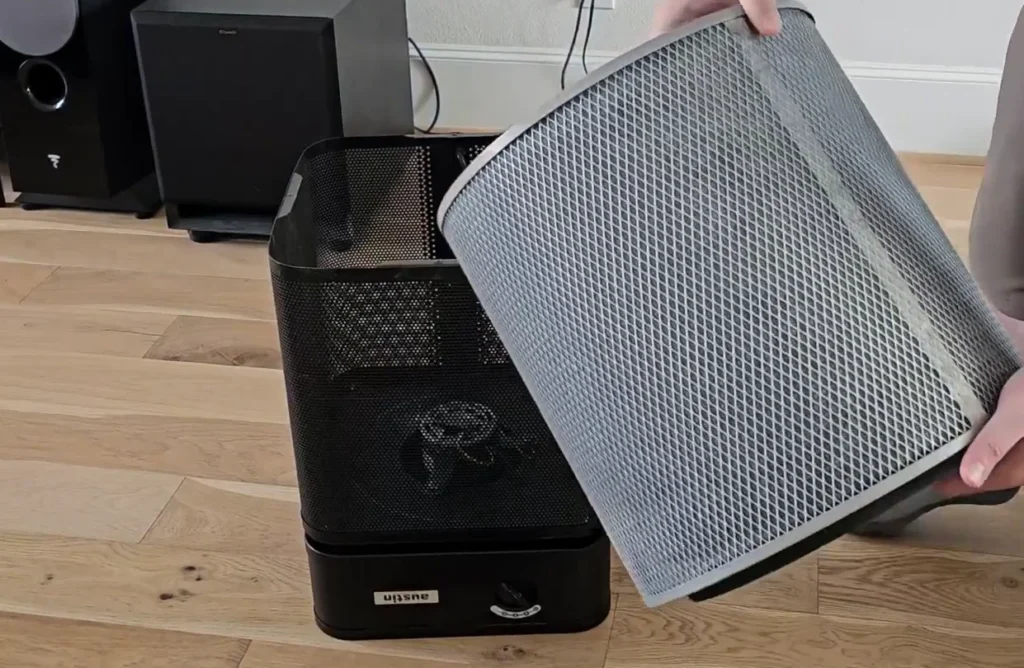
The Austin HealthMate
is the only unit here with enough carbon mass to survive being placed close anyway.
Do I need one unit or two?
Judge by volume and doorways, not square footage. Two rooms connected by a standard door are two
rooms and need two units (or one unit that gets moved, which nobody ever actually does). An open arch is one space —
that’s the case for a single
EverestAir rather than two smaller machines.
My dog reacts to the purifier — is it a noise I can’t hear?
Quite possibly. AC-motor units in our group emitted 22–38 kHz content that dogs hear and you don’t.
Switch to a DC brushless motor — the Vital 200S
and Core 400S both measured below the
noise floor across the whole ultrasonic band.
What does a pet purifier really cost over three years?
Filters plus electricity, from our logs: $222 for the Vital 200S, $239 for the Core 400S, $322 for the
Austin (all electricity, no filters), $338 for the Winix, $378 for the EverestAir. Purchase price on top — see the
3-year bill table.
Is “Pet Edition” worth paying extra for?
Almost never. One extra fabric layer, roughly $12. The exception is Levoit’s Smoke Remover cartridge
for the Core 400S — more carbon,
barely more money.
🐾 Still deciding?
If you have pets, a floor, and a limited appetite for filter shopping, start with the
Vital 200S. It won on fur capture, airflow retention and three-year cost — and it’s the one still running in my own
living room, currently with a cat asleep on top of it.
Jason Miller’s expertise in air purification stems from a personal mission to alleviate his son’s allergies, which evolved into a deep passion for air quality science. He combines a parent’s perspective with an engineer’s rigor, using professional-grade tools to conduct data-driven tests that separate marketing hype from genuine performance. Jason’s goal is to translate complex technical information into clear, trustworthy recommendations, empowering families to make informed decisions and create healthier living environments.