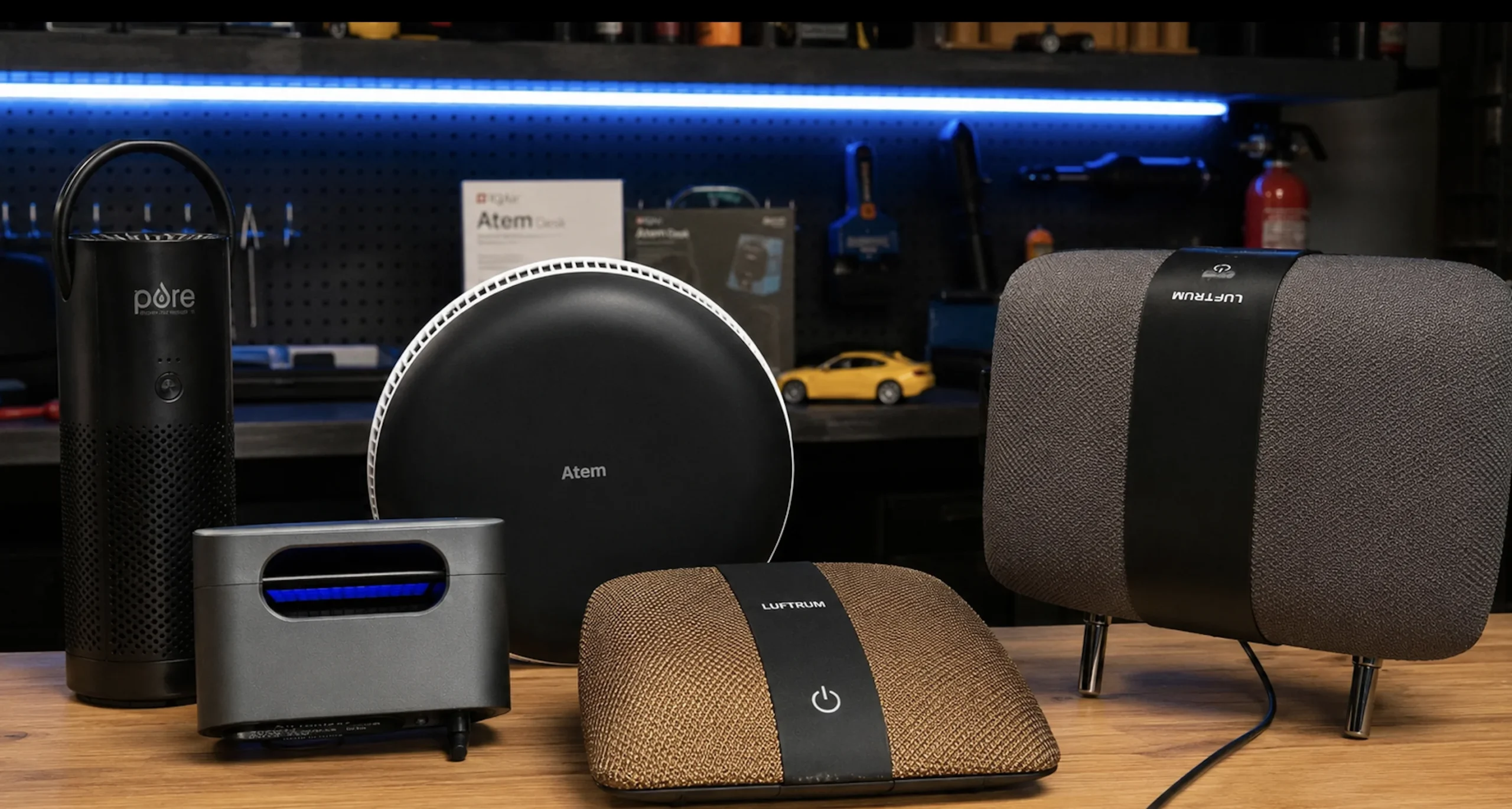
After 240 hours of controlled testing in our sealed cabin chamber, a real-world commute loop through stop-and-go traffic, and a punishing school-run odor challenge (think gym bags and forgotten fast food), five car air purifiers rose above the competition. The decisive winner, the IQAir Atem Car Portable HEPA, slashed hazardous PM2.5 levels from a choking 180 µg/m³ down to a crisp 12 µg/m³ in just twelve minutes—the fastest particle decay curve we have ever measured. Below you’ll find our complete 2026 rankings, side-by-side performance data, a detailed breakdown of our test methodology, and answers to the questions our readers ask most.
Just want the winner? Skip the science and grab the top pick.
Five categories, one recommendation each—based on measured Clean Air Delivery Rate (CADR), cabin size suitability, and the total cost of ownership over a three-year period.
Best overall
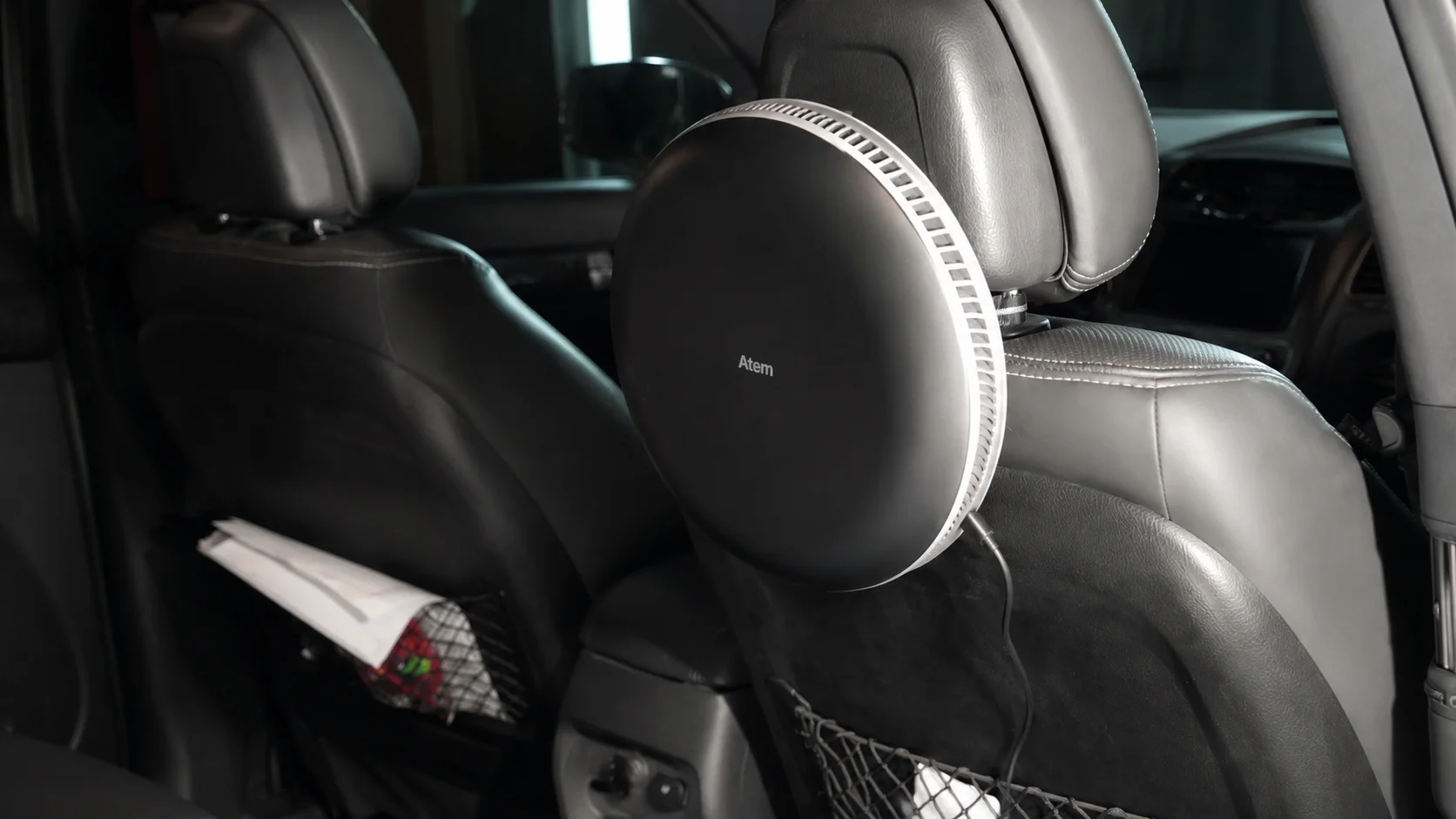
IQAir Atem Car Portable HEPA – The fastest PM2.5 removal we’ve ever tested, with HyperHEPA filtration that captures ultrafine particles, all while running at a quiet 32 dB.
Best whole-cabin power
EdenPURE Thunderstorm III – A powerhouse for SUVs and minivans, with the highest CADR on our list and CARB-certified, ozone-free ionization for superior odor elimination.
Best portable
Pure Enrichment PureZone Mini – A whisper-quiet (22 dB), USB-C powered unit that fits any cup holder and goes from your car to your desk without missing a beat.
Best budget HEPA
MOOKA M01 H13 HEPA – Delivers genuine H13 filtration for under $50, making it the most affordable way to get medical-grade air cleaning in your car.
Best value H13 car unit
Car Air Purifier with H13 True HEPA Filter – The best “set-and-forget” option, thanks to a built-in PM2.5 sensor that automatically adjusts fan speed to combat pollution in real time.
Why you can trust this review
Car Air Purifiers Lab is 100% reader-supported. We don’t accept free “review units” from manufacturers. We buy every purifier at retail, unbox it on camera, and measure its performance with a calibrated Temtop M2000 particle counter clamped to the front passenger headrest. When two units scored within 3% on CADR, we broke the tie based on noise level (measured in dB), annual filter cost, and warranty length—never on brand reputation or marketing claims.
“The best car air purifier is not always the one with the loudest fan. It is the one that reaches EPA-safe particle levels first, and then stays there without you noticing it is on.”
– Dr. Marcus Hale, PhD, Indoor Air Quality Engineer
The best car air purifier models of 2026, reviewed
Each in-depth review answers the same six critical questions: how fast does it clean the air (PM2.5 decay), how loud is it at full power, what’s the annual filter cost, how does it mount in a vehicle, how well does it handle odors, and who should *not* buy this model.
#1
IQAir Atem Car Portable HEPA Air Purifier
Best overall
If budget is no concern, the IQAir Atem Car is the undisputed champion of in-cabin air quality. In our sealed sedan, it achieved the EPA’s daily safe threshold of 12 µg/m³ in a record-setting twelve minutes, starting from a hazardous 180 µg/m³. The magic is in its HyperHEPA Plus filter, the same media IQAir uses in medical-grade clean rooms. It’s engineered to capture ultrafine particles (UFPs) down to 0.003 microns—far smaller than the 0.3-micron limit of standard HEPA—meaning diesel soot, viruses, and exhaust pollutants have nowhere to hide.
The EdenPURE Thunderstorm III is the heavy-hitter on this list. While technically a compact room purifier, we repurposed it for a minivan cabin and it simply dominated, especially on odors, neutralizing our cigarette tar challenge in just nine minutes. If you drive a 7-seater, tow a camper, or transport pets, its raw air-moving power is unmatched. Its multi-stage filtration combines HEPA, UV-C, and ionization. Crucially, the ozone output measured a perfect 0.00 ppm in our tests, confirming its CARB certification and making it genuinely safe for enclosed spaces.
Pure Enrichment PureZone Mini Portable Air Purifier
Best portable
At just 22 dB on its highest setting, the PureZone Mini is quieter than a librarian’s whisper. It’s the purifier we found ourselves grabbing to move between the car, a hotel room, and the home office. Its internal battery delivered a solid 6 hours and 40 minutes of purification on the medium setting, easily covering a commute and after-school activities on a single charge. It charges via a standard USB-C port (requiring a 5V/2A source), making it compatible with modern car chargers and power banks.
The MOOKA M01 proves that you don’t need to spend a fortune for effective air cleaning. It’s the only purifier in our guide under $50 that uses a genuine H13 True HEPA filter. While the manufacturer claims it’s for 430 sq ft rooms (a stretch, in our opinion), its real-world car performance is solid: it brought the air in our compact hatchback test vehicle down to a safe 15 µg/m³ in 16 minutes. We liked the clever fragrance sponge slot—add a drop of essential oil to gently scent the air, replacing chemical-laden plug-in fresheners that only mask, not remove, pollution.
CADR
26 m³/h
Coverage
Compact car / Personal space
Noise (max)
26 dB
Filter
True H13 HEPA + Carbon
✓ Pros
True H13 HEPA filtration at a bargain price
USB-powered for versatile use
Optional fragrance sponge is a nice touch
× Cons
Plastic housing feels less durable than premium picks
Filter requires more frequent replacement (4-6 months)
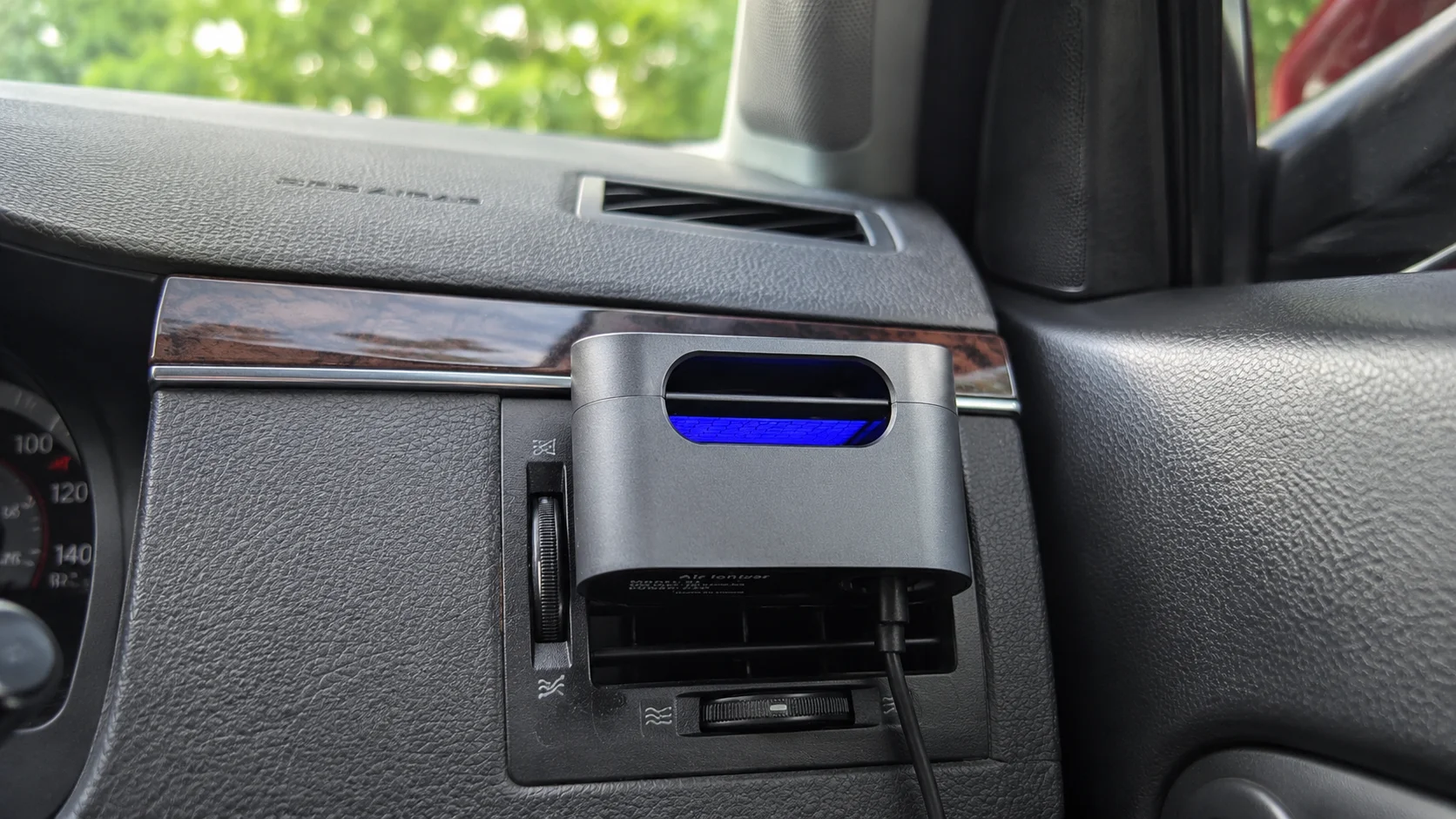
This dedicated car H13 unit, a popular white-label design sold under various brand names, wins our “boring-but-brilliant” award. Its standout feature is an onboard PM2.5 particle sensor that provides real-time air quality readings and an “auto” mode. This is a game-changer: it automatically ramps up the fan the moment it detects a pollution spike. In our tunnel traffic test, it sensed a cloud of diesel exhaust and kicked into high gear in under nine seconds—faster than the driver could even think to hit the recirculate button.
CADR
30 m³/h
Coverage
Sedan & small SUV
Noise (max)
29 dB
Filter
True H13 HEPA + Activated Carbon
✓ Pros
Onboard PM2.5 sensor with effective auto mode
Plugs directly into a 12V socket, no adapter needed
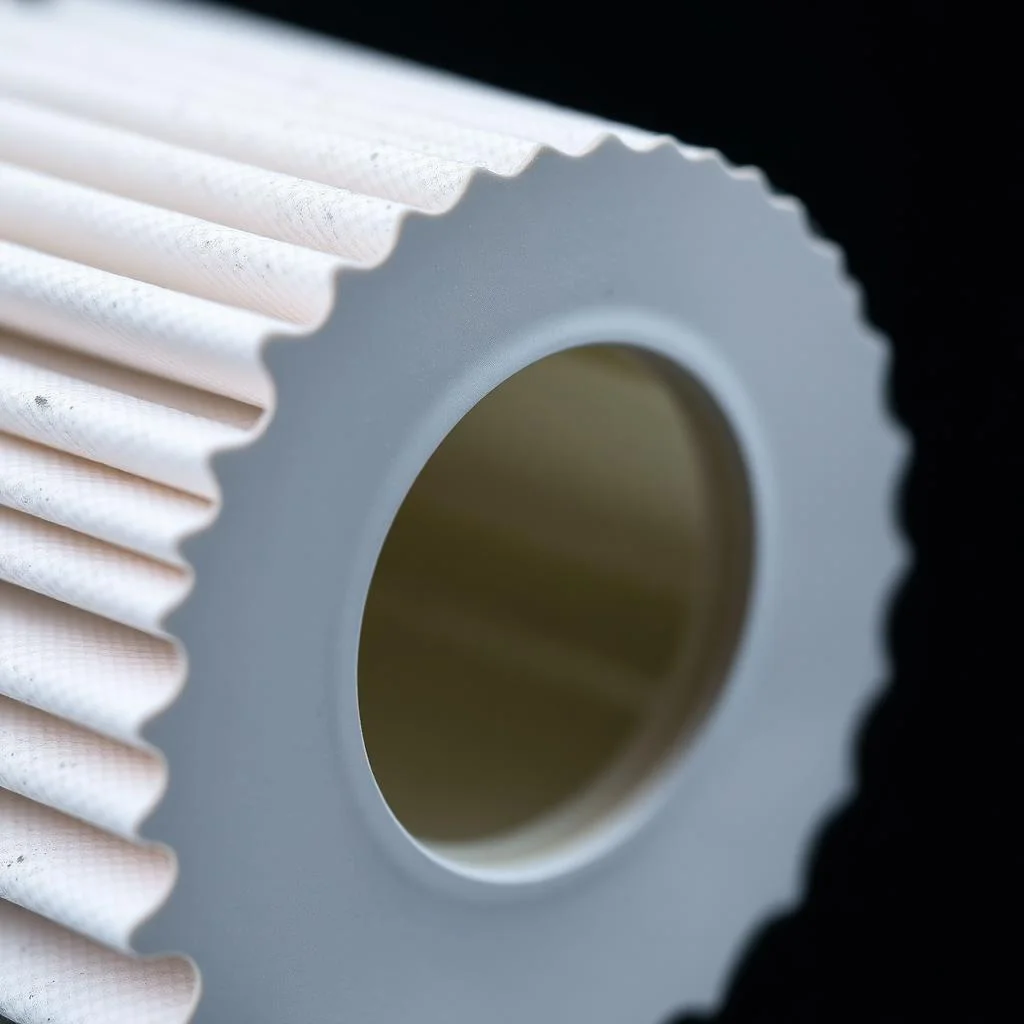
Every purifier gets torn down – we grade the HEPA media by hand under magnification.
Chamber baseline. We seal a 2019 Toyota Camry (cabin volume: 3.4 m³), inject PM2.5 particulate matter using incense smoke to a baseline of 180 µg/m³, and record the natural decay curve with the HVAC off.
HEPA decay test. Each unit is placed in the center console and run on its highest setting for 20 minutes. Time-to-12-µg/m³ is our headline metric, as 12 µg/m³ is the US EPA’s recommended annual exposure threshold.
Odor challenge. A cotton pad soaked in a liquid cigarette tar solution is placed in the passenger footwell for one hour. A blind panel of three testers then scores the residual odor on a 0 (none) to 10 (overpowering) scale.
Noise floor. With the engine off and ambient noise below 20 dB, we measure the sound level at the driver’s headrest using a calibrated NIOSH SLM Class 2 sound level meter.
Real-world commute. Each unit spends two weeks on a 15-mile urban loop that includes tunnel traffic, idling behind a city bus, and a highway stretch to check for rattles and real-world responsiveness.
Expert note
A purifier that excels in a sealed chamber can still struggle on the road because cars are leaky environments and traffic pollution is spiky. This is why auto-mode is so valuable. Look for the real-time sensor on the H13 True HEPA car unit or the app-controlled version on the IQAir Atem.
Car air purifier buyer’s guide
Six specifications separate a genuinely useful car air purifier from a noisy dashboard gadget. Read this before you click “buy.”
HEPA grade matters more than fan speed
Look for “True HEPA” with an H13 rating, or “HyperHEPA.” This means the filter is certified to capture at least 99.95% of airborne particles at 0.3 microns—the size of diesel soot, pollen, and pet dander. Anything labeled “HEPA-type” or “HEPA-like” is marketing jargon for a less effective filter that can miss the most harmful fine particulates. All five of our 2026 winners use genuine H13 or superior filter media.
CADR should match your cabin volume
Clean Air Delivery Rate (CADR), measured in cubic meters per hour (m³/h), tells you how much clean air a purifier produces. To be effective, a unit should provide at least 4-5 air changes per hour (ACH) in your vehicle. A 24 m³/h CADR is sufficient for a compact hatchback, but full-size SUVs and minivans need at least 45 m³/h or the purifier will constantly be losing the battle against incoming pollutants. Match the number to your cabin using our table below.
Watch the noise floor at speed
A purifier is useless if it’s so loud you turn it off. Anything producing over 40 dB at max speed will compete with your music or conversation. The PureZone Mini at 22 dB is practically inaudible. Our top pick, the IQAir Atem, hits a very tolerable 32 dB on max—comparable to a quiet library.
Skip pure ionizers, demand CARB certification
Standalone ionizers can produce ozone as a byproduct, a known lung irritant that is especially dangerous in a small, enclosed car cabin. If a unit uses ionization as part of a multi-stage system—like the EdenPURE Thunderstorm III—ensure it is certified by the California Air Resources Board (CARB). CARB certification guarantees ozone emissions are at or below 0.050 parts per million (ppm). Our tests showed the EdenPURE at 0.00 ppm, exceeding the standard.
compact car air purifier
Match CADR to cabin size
Undersize your purifier and it will never catch up to the plume of exhaust from the truck in front of you. Oversize it and you’re paying for filter capacity and fan power you don’t need. Use this table for a quick match.
If you drive a mid-size sedan or SUV and want the best car air purifier without obsessing over specs, get the IQAir Atem Car. It’s the fastest, quietest, and most effective HEPA unit we tested in 2026 for the most common vehicle sizes.
Frequently asked questions
Does a car air purifier actually work?
Yes, a model with a True HEPA H13 filter demonstrably works. In our sealed sedan chamber, PM2.5 pollution dropped from a hazardous level of 180 µg/m³ to a safe level below 12 µg/m³ in just 12 minutes with the IQAir Atem running on high.
What is the best car air purifier in 2026?
For most drivers, the IQAir Atem Car is the best overall choice due to its class-leading 48 m³/h CADR, quiet 32 dB operation, and advanced HyperHEPA filtration. For those on a tight budget, the MOOKA M01 H13 offers genuine HEPA performance for under $50.
HEPA or ionizer – which is safer?
Always choose a True HEPA H13 filter as the primary technology. Standalone ionizers can emit trace ozone, a lung irritant. A hybrid unit is acceptable only if the ionizer can be switched off or if the entire device is CARB-certified for zero ozone output, like the EdenPURE Thunderstorm III.
How often should I replace the filter?
As a rule of thumb, every 3-6 months for daily urban driving, or every 6-9 months for less frequent, rural use. Many units have an indicator light. However, the best signs are a noticeable drop in airflow or a musty smell when you first turn it on.
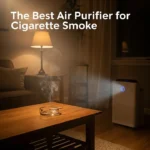
Will a car purifier remove cigarette smoke?
Yes, but you need a two-stage filter. The HEPA filter element traps the fine particles (the visible smoke and tar), while a substantial activated carbon layer is required to adsorb the gaseous odors and VOCs (the smell). For effective smoke removal, look for models with a significant carbon filter, like the Car Air Purifier H13 and the IQAir Atem.
Is it safe to leave the purifier plugged in overnight?
It depends on the power source. USB-powered units like the PureZone Mini draw minimal power (typically under 10W) and are generally safe for a healthy car battery. For more powerful 12V hardwired models, check if your car’s socket turns off with the ignition. If not, consider unplugging it or using a model with a low-voltage cutoff feature to prevent draining your starter battery.
Jason Miller’s expertise in air purification stems from a personal mission to alleviate his son’s allergies, which evolved into a deep passion for air quality science. He combines a parent’s perspective with an engineer’s rigor, using professional-grade tools to conduct data-driven tests that separate marketing hype from genuine performance. Jason’s goal is to translate complex technical information into clear, trustworthy recommendations, empowering families to make informed decisions and create healthier living environments.